

When it comes to dental implants, your jawbone is the foundation. A strong, healthy jaw provides the stability that implants need to last for decades. But for many patients in Downey and the surrounding areas like Pico Rivera and Bell Gardens, bone loss in the jaw is more common than you might think — often the result of tooth loss, gum disease, or aging.
That’s where bone grafting comes in. At Rio Hondo Dental Office, Dr. Sameer Aljanedi and our implant team use advanced bone grafting and sinus lift techniques to rebuild jawbone density and prepare the mouth for successful dental implant placement.
If you’ve ever been told you “don’t have enough bone” for an implant, this guide explains why that happens — and how modern dentistry can fix it.
🦷 What Is Bone Grafting for Dental Implants?
Bone grafting is a minor surgical procedure that adds or regenerates bone in the jaw where it’s too thin, soft, or uneven to securely support a dental implant.
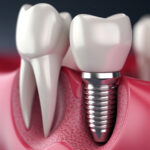
Think of it as rebuilding the foundation before constructing a house. If a dental implant is the “pillar” holding your new tooth, the jawbone is the concrete base that ensures it doesn’t move, tilt, or fail over time.
Bone grafting materials can come from several sources:
- Autograft: Bone from your own body (often from the jaw or hip).
- Allograft: Sterile donor bone from a tissue bank.
- Xenograft: Bone minerals derived from another species, usually bovine.
- Alloplast: Synthetic bone-like material that stimulates natural bone growth.
Over the next several months, your natural bone grows into and around the graft, creating a dense, stable foundation for implants.
💀 Why Is Bone Loss So Common?
Your jawbone isn’t static — it constantly remodels in response to pressure and use. When you chew with natural teeth, those roots stimulate the jawbone and signal it to stay strong.
But when a tooth is lost and no implant replaces the root, the bone begins to shrink (a process called resorption).
Common causes of bone loss include:
- Tooth loss: Bone begins to shrink within months of extraction.
- Gum disease (periodontitis): Chronic inflammation destroys the bone around teeth.
- Infection or trauma: Infections, cysts, or accidents can lead to localized bone loss.
- Long-term denture wear: Traditional dentures sit on the gums and do not stimulate bone growth, causing bone volume to gradually diminish.
- Sinus enlargement: In the upper back jaw, sinus cavities can expand over time, leaving too little bone for implant placement.
This is why many patients who wait years after losing teeth often need bone grafting before implants can be placed.
⚙️ When Bone Grafting Is Needed Before Dental Implants
At Rio Hondo Dental, Dr. Aljanedi evaluates bone health using 3D cone-beam CT scans (CBCT) — which provide a detailed image of bone height, width, and density.
Bone grafting may be recommended if:
- Your CT scan shows insufficient jawbone volume.
- You’ve had missing teeth for a long time.
- You’re replacing molars or premolars near the sinus cavity.
- You’ve experienced trauma, cyst removal, or infection.
- You’re transitioning from dentures to implants.
In short, grafting ensures your future implants integrate solidly and look natural for years to come.
🏗️ Types of Bone Grafting Procedures We Perform in Downey
Not every graft is the same. Dr. Aljanedi tailors each procedure to the patient’s anatomy, treatment goals, and implant plan.
1. Socket Preservation (After Extraction)
Performed immediately after a tooth is removed, this procedure fills the empty socket with bone graft material to prevent shrinkage. It’s ideal if you plan to get an implant in the near future.
Benefits:
- Maintains bone shape and volume
- Reduces discomfort later
- Makes future implant placement faster and easier
2. Ridge Augmentation
If bone loss has already occurred, ridge augmentation rebuilds the height or width of the jaw ridge. The graft is placed under the gum, secured with a membrane, and allowed to heal for several months.
Benefits:
- Restores proper facial contour
- Strengthens implant support
- Ideal for patients missing multiple adjacent teeth
3. Sinus Lift (Sinus Augmentation)
For upper back teeth, where the jawbone is thin and the sinus cavity may have expanded downward, a sinus lift is often needed.
This specialized procedure carefully raises the sinus membrane and adds bone graft material beneath it — creating the height necessary for implant stability.
Keywords optimized: sinus lift dentist Downey, bone grafting for implants Downey
Benefits:
- Enables implants in areas previously impossible
- Restores chewing ability in the upper jaw
- High long-term success rates (over 95% when properly planned)
4. Block Graft (Major Bone Graft)
For extensive bone loss, a small block of bone (usually from the chin or back of the jaw) is secured in the deficient area with tiny screws.
Over time, it fuses with the existing bone to rebuild thickness and strength.
Benefits:
- Restores severe defects
- Creates stable structure for multiple implants
- Commonly used in full-mouth reconstructions
5. Guided Bone Regeneration (GBR)
In this minimally invasive approach, a special membrane barrier is used to direct bone growth while preventing soft tissue from interfering.
It’s often performed alongside minor grafting or during implant placement.
Benefits:
- Accelerates healing
- Promotes strong integration
- Can reduce the need for separate surgeries
🧬 What Happens During the Bone Graft Procedure?
At Rio Hondo Dental Office, your comfort and safety are top priorities. Here’s what most patients can expect:
- Consultation & 3D Imaging:
We take digital X-rays and 3D scans to map your bone structure precisely. - Local Anesthesia or Sedation:
Dr. Aljanedi offers gentle sedation options (like nitrous oxide or oral sedation) to ensure a pain-free experience. - Graft Placement:
The bone material is placed in the target area and stabilized with collagen membranes or small titanium screws if needed. - Healing Phase:
Over the next 3–6 months, your body naturally regenerates bone tissue, fusing the graft with your jaw. - Implant Placement:
Once bone density is sufficient, we place the implant post. In some cases, grafting and implant placement can even be done in a single visit.
⏳ Healing Time & Recovery Tips
Healing time varies based on the procedure and your individual health.
On average:
- Socket preservation: 3–4 months
- Sinus lift: 6–8 months
- Ridge augmentation or block graft: 5–7 months
Aftercare Tips:
- Avoid strenuous activity for 48 hours.
- Don’t touch the graft area with your tongue or fingers.
- Use prescribed antibiotics and saltwater rinses.
- Stick to soft foods for several days.
- Avoid smoking — it severely delays bone regeneration.
- Keep follow-up appointments for progress checks and X-rays.
Most patients report only mild soreness, easily managed with over-the-counter pain relievers.
💪 Why Bone Grafting Is Worth It
Skipping bone grafting when it’s needed can lead to:
- Implant failure due to poor integration.
- Facial collapse or sunken appearance over time.
- Limited prosthetic options due to lack of support.
By investing in bone grafting, you ensure:
✅ Long-term implant success
✅ Natural facial aesthetics
✅ Better chewing strength
✅ Stable bite alignment
🧠 Frequently Asked Questions
Q: Is bone grafting painful?
A: No. We use local anesthesia and sedation for complete comfort. Mild soreness afterward is normal and subsides within a few days.
Q: Can I get an implant immediately after grafting?
A: In some cases, yes. For small grafts or socket preservation, the implant may be placed at the same visit. For larger grafts or sinus lifts, we usually wait 3–6 months.
Q: What’s the success rate of bone grafting?
A: When properly planned and performed, success rates exceed 95%. Dr. Aljanedi’s experience with thousands of implant-related surgeries ensures predictable results.
Q: Does insurance cover bone grafting?
A: Many PPO dental plans partially cover grafting when medically necessary. We’ll help you check your benefits and offer CareCredit or in-house membership savings if needed.
🌇 Why Downey Patients Trust Dr. Sameer Aljanedi for Bone Grafting
Dr. Aljanedi has earned a strong local reputation for his meticulous implant and grafting work.
Here’s what sets him apart:
- Advanced 3D Imaging: Digital CT scans for precise planning.
- Minimally Invasive Techniques: Less discomfort and faster healing.
- All-In-One Office: No need for external referrals — all grafting and implants done onsite.
- Bilingual, Compassionate Team: We proudly serve both English and Spanish-speaking families from Downey, Pico Rivera, Bell Gardens, and surrounding areas.
- Affordable Financing: CareCredit and membership plans make advanced treatment accessible to everyone.
🚗 Conveniently Located for Pico Rivera & Downey Residents
Rio Hondo Dental Office
📍 8514 Paramount Blvd., Downey, CA 90240
📞 Call us at (562) 928-5559
We’re only a 7-minute drive from Pico Rivera City Hall, near Rio Hondo Golf Club — with easy parking and late evening hours to fit your schedule.
🗣️ Patient Testimonial
⭐⭐⭐⭐⭐
“I was nervous when I found out I needed a bone graft, but Dr. Aljanedi explained every step clearly. The process was smooth, and a few months later, my implant feels like a real tooth. Highly recommend to anyone in Downey or Pico Rivera!”
— Gabriela V.
🌱 Ready to Rebuild Your Smile?
Whether you’re missing one tooth or several, bone grafting opens the door to permanent, healthy dental implants. Don’t let jawbone loss limit your options — with today’s technology, nearly every patient can qualify for implants.
Call Rio Hondo Dental Office today at (562) 928-5559 or request an appointment online to schedule your 3D bone evaluation with Dr. Sameer Aljanedi.
We’ll help you restore your bone health, rebuild your smile, and regain the confidence to eat, laugh, and live freely again.



 English
  Spanish
  Arabic
  Chinese
  Tagalog
  Korean
  Tamil
Tamil  Vietnamese