Dentures & Implants
Partial Dentures: Acrylic, Metal and Flexible Compared
Most people comparing partial dentures think they are choosing a material. The more useful question is where your chewing force ends up: carried down through your remaining teeth, or pressed into your gums. That one difference explains most of what follows, including comfort, lifespan and what happens to the teeth the partial hooks onto.
What are the types of partial dentures, and which is best?
Short answer: There are three main types. An acrylic partial, or "flipper," is thick, inexpensive and meant to be temporary. A cast metal partial is thin and rigid, rests on your teeth and usually lasts longest. A flexible nylon partial is light with no visible metal, but it is hard to reline, repair or add a tooth to. For long-term wear, cast metal is usually the soundest choice.
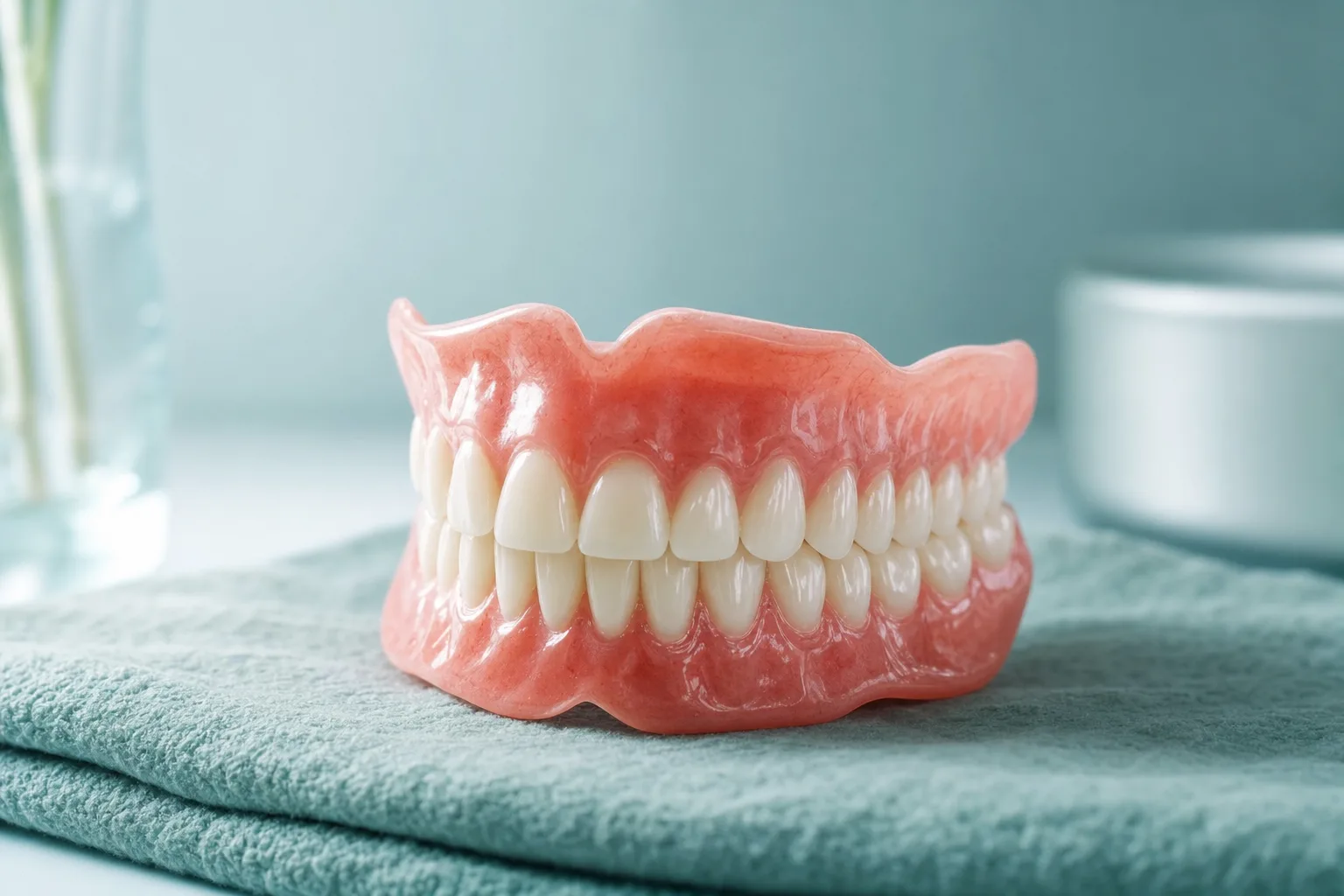
All three are removable, and all three fill gaps when you still have natural teeth worth keeping. Our page on full and partial dentures walks through how the appointments work. This article is about choosing between the designs, and about the drawbacks nobody mentions until you already own one.
Acrylic vs. metal vs. flexible partial dentures, side by side
| Acrylic (flipper) | Cast metal framework | Flexible nylon | |
|---|---|---|---|
| Thickness and bulk | Thickest. Acrylic needs roughly 2–3 mm to resist cracking, and an upper usually covers much of the palate | Thinnest. The metal can be about half a millimeter in places and leaves more of the palate open | Thin and light, with some bulk where the teeth attach |
| Where chewing force goes | Onto the gums | Mostly onto the teeth, through small rests | Onto the gums |
| Effect on anchor teeth | Settles over time and presses on the gumline of neighboring teeth; wire clasps loosen | Kindest when well designed. Needs small rest seats shaped into the enamel | No metal, but clasps hug the gumline and the base flexes into the gum; can trap plaque there |
| Repairability | Easiest. Cracks and popped-off teeth are often simple fixes | Acrylic parts and teeth repair well; a broken clasp or frame needs lab welding or a remake | Hardest. Standard repair acrylic does not bond to nylon |
| Relining when gums change | Straightforward | Straightforward on the acrylic saddle areas | Difficult; usually lab-only, sometimes not practical |
| Adding a tooth later | Easy and commonly done | Usually possible, and easier if the design anticipated it | Limited. Sometimes possible through the original lab, often a remake |
| Typical service life | Months to a couple of years | Commonly 5–10 years or longer | A few years to several |
| Relative cost | Lowest | Usually highest | Middle to high |
| Best suited to | Healing periods and short waits before a permanent replacement | Long-term replacement of several teeth | A small gap in the smile zone in an otherwise stable mouth |
Those service-life figures are typical ranges, not promises. Grinding, dry mouth and how soon you come in once the fit loosens all move the number.
Acrylic partials ("flippers"): why they are a temporary appliance
A flipper is the quickest and least expensive way to put a tooth back in a gap. It is a plate of pink acrylic carrying one or more teeth, held by a couple of bent-wire clasps or by nothing more than a snug fit. It can often be made ahead of time and placed at the visit when a tooth comes out, so you are not walking around with a space while the site heals.
The problem is what it rests on. A flipper has no supports on your teeth, so every bite pushes it into the gum. Gum and bone remodel under that pressure, the plate settles, and its edges begin pressing on the gumline of the teeth next door. Dentists have an unflattering nickname for a flipper worn too long: a "gum stripper."
Acrylic also has to be thick to survive, which on an upper usually means a plate across much of the palate. Food tastes duller. Hot and cold register late. And the plate cracks if it hits the sink.
For a few months, none of that matters much. Worn for years as the final answer, a flipper tends to produce the same pattern: inflamed gums around the anchor teeth, decay where acrylic sits against enamel, and repeated fractures. Its one lasting advantage is that adding another tooth to it is quick and inexpensive.
Cast metal partials: thin, rigid and built for the long run
A cast partial starts with a cobalt-chromium framework designed for your mouth and cast to fit it. Small metal rests sit in shallow seats shaped into the enamel of the anchor teeth. Those rests are the whole point. They send chewing force down the roots, the direction teeth are built to take load, and they stop the partial from sinking into the gum.
Rigid sounds uncomfortable and turns out to be the opposite. A partial that does not flex does not rub. Because metal is strong when thin, the framework can leave much of the palate uncovered, so speech and taste recover faster.
The honest downsides:
- A clasp may show. If an anchor tooth sits near the front, a metal arm can be visible in a wide smile. Careful design can sometimes hide it. Not always.
- More appointments. Commonly four or five visits over several weeks, because the framework is tried in before the teeth are set on it.
- Higher upfront cost, driven by the lab work.
- Anchor teeth must be sound. That can mean a filling or a crown before impressions are taken.
- Free-end designs still lean on gum. If there is no tooth behind the gap, the back of the partial rests on the ridge and will need relining as that ridge shrinks.
Flexible nylon partials: comfortable, discreet and hard to service
The appeal is obvious the moment you hold one. No metal. Clasps the color of gum tissue. Light, thin and close to unbreakable if dropped. On delivery day, patients often like a flexible partial better than anything else that could have been made for them.
The trouble arrives later, and it comes from the same property that makes the appliance comfortable. A base that flexes cannot carry load to the teeth, so chewing bends it into the gum, and over years that pressure may speed up shrinkage of the ridge underneath. The clasps wrap the tooth right at the gumline, where plaque does the most harm. Nylon also scratches more easily than polished acrylic or metal, and a roughened surface holds stain and odor and is difficult to re-polish.
Then your mouth changes, as every mouth does. Ordinary reline and repair acrylics do not bond chemically to nylon. A reline usually means sending the partial to a lab equipped for that specific material, and adding a tooth after a later extraction can mean starting over with a new appliance. Even tightening a loose clasp takes heat, not pliers.
So a flexible partial suits a stable mouth: one or two teeth missing in the smile zone, healthy neighbors, nothing else expected to fail soon. It is also the usual answer for the uncommon patient with a true acrylic allergy. It is a poor match when several remaining teeth are questionable, because every loss afterward is expensive to accommodate.
Which partial denture is most comfortable, and which lasts longest?
On day one, flexible usually wins. By year three, a well-made cast metal partial usually does, because comfort over time is mostly a matter of stability. An appliance that stays put does not create sore spots.
For lifespan, cast metal is ahead by a wide margin, because the framework outlives several relines of the acrylic attached to it. Flexible partials tend to be replaced rather than repaired once the fit goes. Flippers are built for months, though plenty of people stretch one much further than they should.
Do clasps damage the teeth they hook onto?
Less than people fear, and not in the way they expect. A properly designed clasp is passive. It rests against the tooth without squeezing and only engages when something tries to lift the partial out. The clasp itself is rarely what harms an anchor tooth. Three other things are.
- Plaque. A partial covers tooth surfaces and gum margins that saliva used to rinse. Decay and gum inflammation start under clasps and along the line where the base meets the tooth. This is the biggest risk and the most controllable one: take the partial out and rinse after meals, brush it and your teeth separately, and leave it out overnight. The ADA's MouthHealthy guidance likewise calls for cleaning removable dentures every day.
- A fit that has drifted. Gums and bone change shape; the partial does not. Once it rocks, it levers on the anchor teeth with every bite. A reline or clasp adjustment corrects this, and sooner is cheaper than later.
- Handling. Biting a partial into place, pulling it out by one clasp, or bending a clasp at home with pliers. Seat it with your fingers and lift it out evenly.
Dry mouth raises the stakes. If your medications leave you with little saliva, the anchor teeth are more prone to decay at the gumline, and it is worth asking about more frequent cleanings and prescription-strength fluoride.
How long does it take to get used to eating and speaking with a partial?
Most people are talking normally within a week or two and eating comfortably within about a month. It tends to go like this:
- First few days. It feels enormous. You make more saliva, "s" and "th" sounds come out slightly off, and a sore spot or two may appear.
- Weeks one and two. Speech settles; reading aloud for ten minutes a day speeds it up. Stay with soft food cut small, and chew on both sides at once to keep the partial level.
- Weeks two to four. Firmer foods come back gradually. Biting straight into an apple or corn on the cob with replacement front teeth tips the appliance, so cut those up instead.
- Up to two months. Lower partials with no tooth behind the gap take the longest to feel secure. Upper plates that cover the palate are slowest for taste and speech.
Sore spots are an adjustment problem, not a toughness test. Come back in, and wear the partial for a few hours beforehand so the pressure mark is visible. Do not file it yourself. Our guide to the first weeks with a denture covers eating, cleaning and overnight care in more detail.
Get seen urgently if… a clasp or a piece of a broken partial may have been swallowed or inhaled. If you are coughing, wheezing or short of breath, call 911 rather than a dental office. Call us promptly, too, for swelling in the gum or face near an anchor tooth, or for a sore under the partial that has not healed within two weeks. Small single-tooth flippers are the ones most likely to come loose during sleep, which is one more reason not to wear one overnight.
Is a partial denture a good stepping-stone to implants?
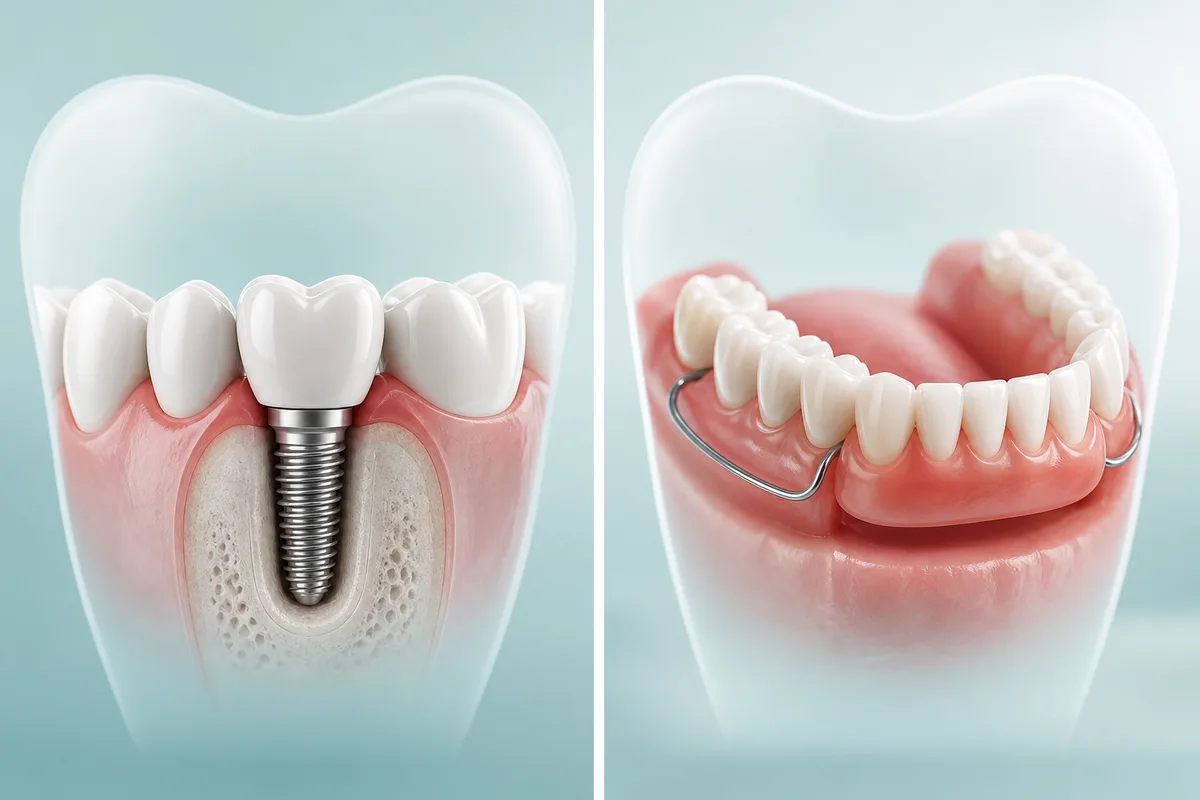
Often, yes. A flipper is the standard placeholder while an extraction site or bone graft heals and while a dental implant integrates with the jaw, which commonly takes a few months. The acrylic is relieved over the surgical site so it does not press there. A cast partial can serve as a longer holding pattern while you save or phase treatment. Worn consistently, it keeps neighboring teeth from tipping into the gap and the opposing tooth from drifting toward it.
What a partial cannot do is hold bone. Jawbone that no longer surrounds a root shrinks, fastest in the first year after the tooth is lost, and an appliance resting on the gum does nothing to slow that. Wait several years and the implant you had in mind may need grafting first. If implants are the goal, say so at the start. It changes which partial makes sense and how much is worth spending on it.
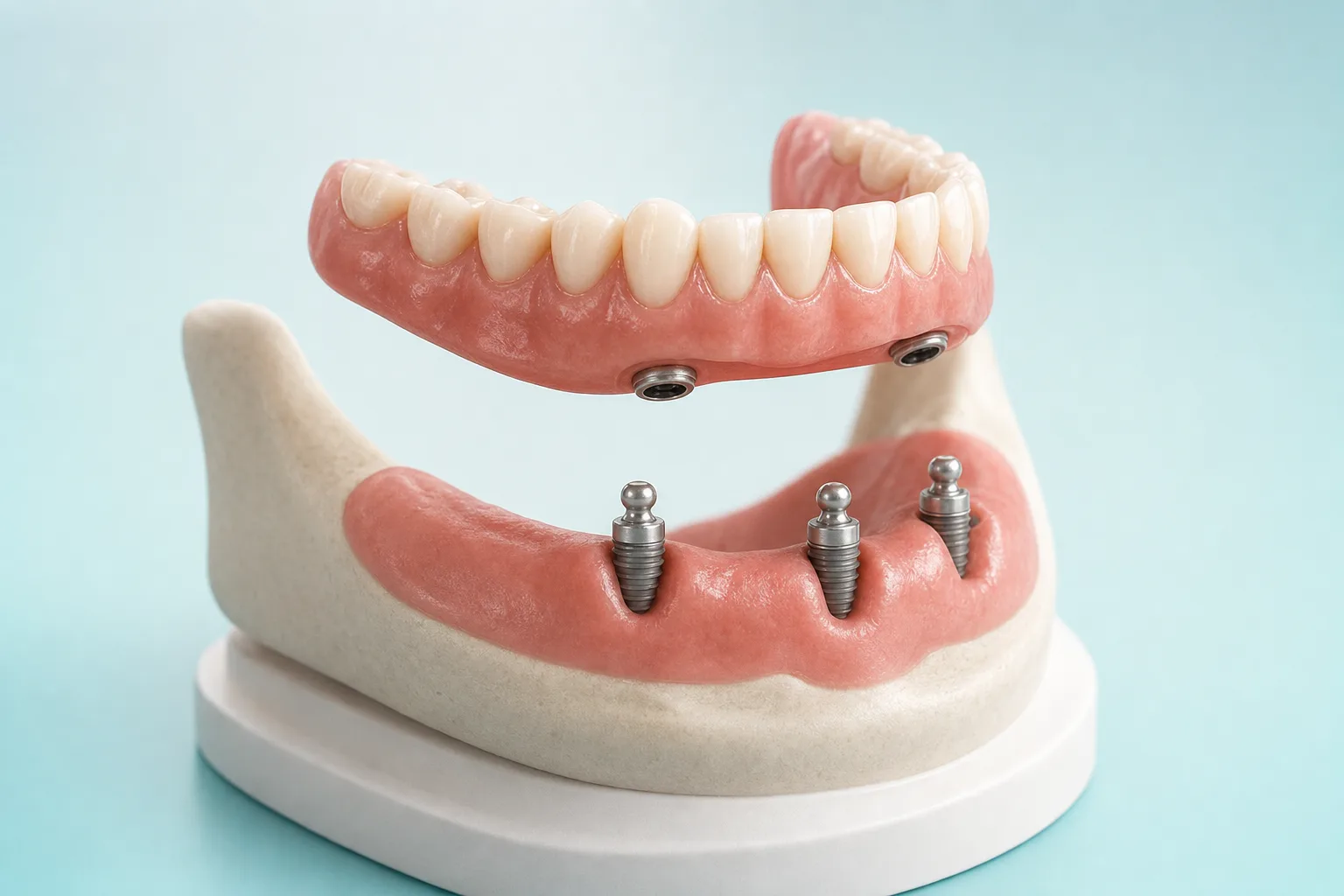
Two other paths deserve a mention. For a single gap with strong teeth on both sides, a fixed dental bridge may suit you better than any removable option. And if most of the teeth in an arch are failing, the comparison shifts to a complete denture or a removable overdenture held by implants. Our overview of tooth replacement options lays those choices out together.
Who is not a good candidate for a partial?
- Active gum disease or loose anchor teeth. Clasping a tooth that is already losing bone support tends to hurry its exit. Gum treatment comes first.
- Untreated decay on the teeth the partial will rest against.
- Too few teeth, or teeth bunched on one side. A partial needs anchors spread around the arch to stay stable.
- A strong gag reflex. Upper acrylic plates are the hardest to tolerate; an open-palate metal design is sometimes the workaround.
- Limited hand strength or dexterity. Clasps take a firm, precise push and pull every day.
What actually changes the cost of a partial denture
A fee quoted without an exam is a guess, because the appliance itself is often not the largest part of the total. Four things move it.
- Design and lab work. A cast framework is individually designed, cast and finished, which makes it the most lab-intensive option. Acrylic is the least. Flexible sits in between, sometimes close to cast metal.
- Preparing the mouth. Fillings or crowns on anchor teeth, gum treatment, extractions. This is the line most often missing from an advertised price.
- How many teeth, and where. A partial for a free-end gap at the back needs more engineering than one filling a small space between two solid teeth.
- Upkeep. Relines, repairs and eventual replacement. A flipper remade three times, or a flexible partial replaced because one more tooth was lost, can overtake the cost of a cast partial that simply had a tooth added.
How insurance and Denti-Cal typically treat partials
PPO plans commonly class a partial denture as a major service and pay a percentage, often around half, up to the annual maximum. Most also limit replacement to once every five years or longer, and some carry waiting periods or a missing-tooth clause that excludes teeth lost before the policy began.
Denti-Cal (Medi-Cal Dental) covers partial dentures for adults with prior authorization. The criteria look at how many teeth are missing and where they sit. Resin-based partials are the routine approval, a cast metal framework needs stronger justification, and you should not assume a flexible partial is covered without checking first. We accept Denti-Cal, Medi-Cal and most PPO and HMO plans, and our insurance and Denti-Cal page explains how benefits are verified before treatment starts. For whatever a plan does not pay, financing through CareCredit, Cherry or Sunbit and our in-house membership plan are available.
One timing point for this part of the year: if your plan runs on a calendar year, unused benefits typically expire on December 31. A cast partial takes several weeks from impressions to delivery, so October is a sensible month to start if you want it finished on this year's benefits.
Questions to ask before you choose a partial
- Will this design rest on my teeth or on my gums?
- Which teeth will it clasp, and do any of them need work first?
- If I lose another tooth, can one be added, or would I need a new partial?
- Can it be relined in the office, or does it go out to a specialty lab?
- Is this meant to be temporary, and if so, what is the plan after it?
- What will my plan pay, and when would it pay for a replacement?
An exam and X-rays of the teeth that would anchor the partial answer most of these in one visit. To have Dr. Sameer Aljanedi look at your options, call (562) 928-5559 or request an appointment at our Downey office. Se habla español.
Have questions about your smile?
Dr. Sameer Aljanedi and the team at Rio Hondo Dental Office are here to help. Se habla español.