Specialty Care
Root Canal
A root canal isn’t the thing causing the pain — it’s the thing that ends it. Below: how the appointment actually goes, how many visits your tooth is likely to need, what the first week feels like, and why the crown afterward matters more than most people expect.
Se habla español · Serving Downey, Pico Rivera, South Gate, Bellflower & nearby
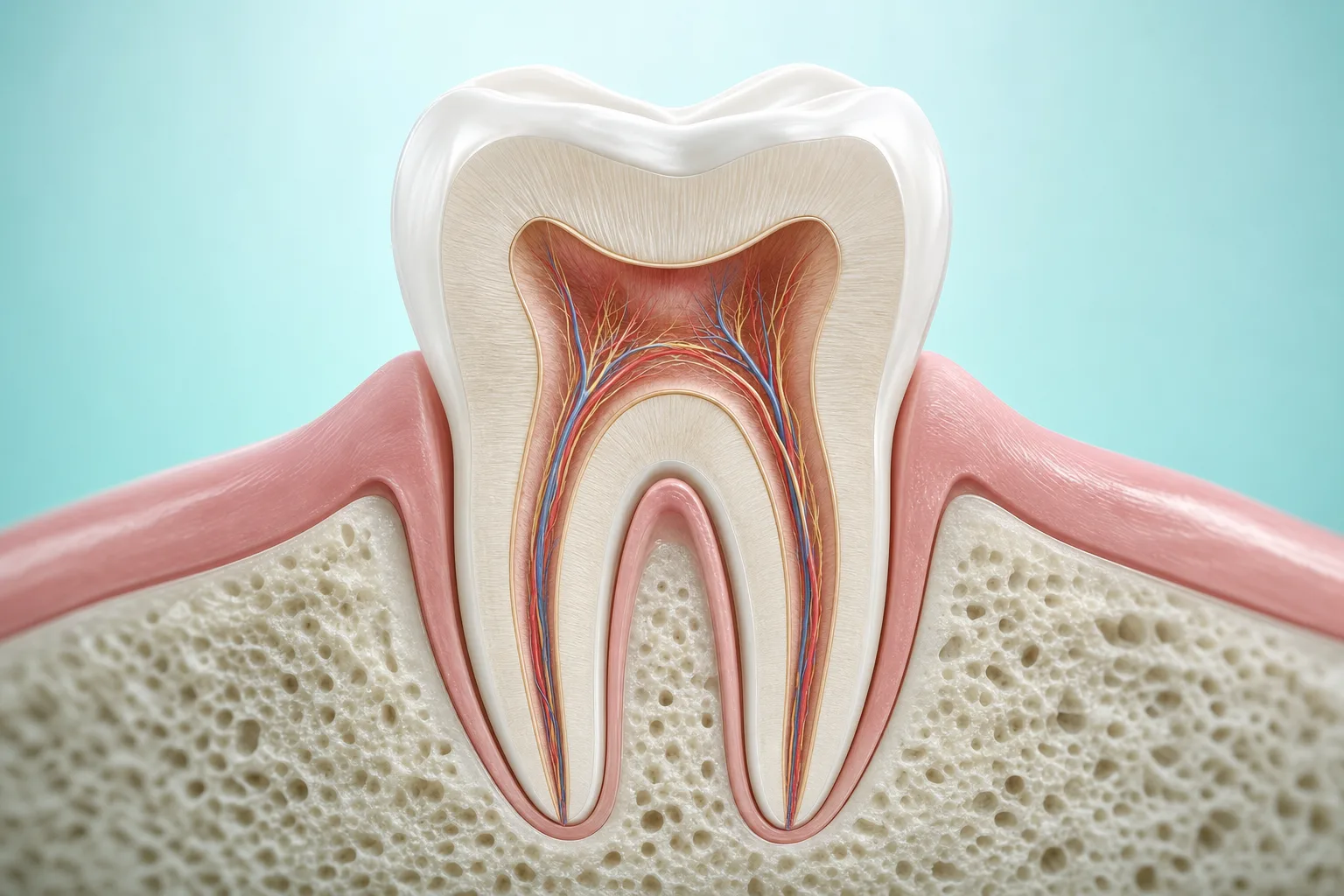
What a root canal actually does
Short answer: A root canal removes infected or dying pulp from inside a tooth, disinfects and shapes the narrow canals in each root, then fills and seals them. It treats the source of the pain instead of masking it, and it keeps your own tooth in your jaw. Most teeth are finished in one or two visits and need a crown afterward.
Every tooth is hollow. Inside sits the pulp — nerve and blood vessels running from the chamber under the biting surface down through each root. Deep decay, a cracked cusp, a tooth that has been drilled and refilled three times over twenty years, or a knock to the mouth in high school can all let bacteria reach it. Once pulp is infected or dying, it does not recover. The realistic choices narrow to cleaning out the inside of the tooth or taking the tooth out.
Pulp pain is the kind that ruins sleep and empties a bottle of ibuprofen. Removing the pulp is what stops it, usually within minutes of starting. If you are in that much pain right now, treat it as urgent dental care rather than something to ride out over a weekend.
Signs it’s the nerve, not just a sensitive tooth
Ordinary sensitivity and a dying pulp feel different, and the difference is mostly about how long the pain outlasts the trigger. Time it with your phone. A cold sip that stings for a second is exposed dentin. Pain still going 30 seconds after the cold is gone is a different problem — we go through the symptom patterns that point to a dying nerve, and the ones that usually mean something simpler, in more detail.
| What you feel | What it commonly means | What it usually takes |
|---|---|---|
| Sharp zing to cold, gone in a second or two | Exposed dentin, a worn notch at the gumline, or a small cavity | A filling, a desensitizing agent, sometimes nothing |
| Cold pain lingering 30 seconds or more, or pain that starts on its own | Pulp inflammation past the point of recovery | Root canal or extraction |
| Hot drinks hurt; cold water actually relieves it | A pulp that is dying or dead, with pressure building at the root | Same-week care — don’t wait this one out |
| Throbbing that wakes you, worse lying flat | Pressure inside the tooth rising when you’re horizontal | Root canal or extraction |
| Pain on biting, or on releasing the bite | A cracked tooth, an infection at the root tip, or a filling sitting high | Exam and testing before anyone drills |
| A pimple on the gum that drains and then stops hurting | A chronic abscess venting itself. Still active infection. | Root canal or extraction |
| One tooth slowly darkening years after a knock | The pulp died quietly at the time of the injury | Root canal, then the color addressed separately |
Biting pain deserves its own note, because it is the symptom most often misread — it can be a crack, an abscess or simply a restoration a fraction of a millimeter too tall. Our guide to tooth pain when you bite down walks through telling those apart. And plenty of teeth needing treatment give no warning at all; the infection shows up as a dark shadow at a root tip on a routine film, which is a quiet argument for keeping up with regular cleanings and exams and the X-rays that go with them.
Get seen urgently if… swelling is spreading into your cheek, jaw or under your eye, you have a fever, or you can’t open your mouth wide. That means the infection has moved past the tooth. Call us at (562) 928-5559 the same day — and if swallowing or breathing feels difficult, go to an emergency room now rather than waiting for a dental appointment.
Antibiotics alone will not fix it
Patients ask for a course of penicillin and a wait-and-see plan constantly. It’s an understandable request and it’s the wrong treatment. The American Dental Association published a clinical practice guideline in 2019 on antibiotic use for urgent dental conditions, and its conclusion was direct: in a healthy adult with irreversible pulpitis or an abscess still confined to the tooth, antibiotics are not a substitute for treating the tooth itself. The canal system no longer has a blood supply, so a systemic drug can’t get to where the bacteria are. Definitive treatment — cleaning the canals or removing the tooth — is what resolves it, with over-the-counter analgesics covering pain in the meantime.
Delay carries a real cost here. Infection tracks out of the root tip into bone. A tooth that needed a routine ninety-minute appointment in March can need an emergency visit, drainage and sometimes an extraction by June.

What happens during the appointment, step by step
- Testing and an X-ray. Cold testing, tapping and a periapical film establish whether the pulp is inflamed, dead or healthy — and which tooth is actually responsible. Referred pain lies constantly; upper and lower teeth on the same side get blamed for each other all the time.
- Numbing. Local anesthetic goes in and gets tested before anything touches the tooth. A hot lower molar is genuinely harder to numb than a healthy one. The fix is more anesthetic or a supplemental injection, not pushing through — say something the moment you feel sharpness.
- Isolating the tooth. A thin rubber sheet clamps around it. It keeps saliva and its bacteria out of the canals and keeps disinfecting solutions out of your mouth. It looks odd and it is one of the things that decides whether the treatment holds.
- Opening the tooth. A small access is made through the biting surface, or through the back of a front tooth, to reach the pulp chamber.
- Removing the pulp. This is the moment the pain stops. Pressure drops as soon as the inflamed tissue is out.
- Cleaning and shaping. Fine files follow each canal to the root tip, with the working length measured so nothing is left short and nothing is pushed beyond the end. Between files the canals are flushed with disinfectant. This is the slow part, and it is the part that determines whether the tooth stays quiet for the next twenty years.
- Sealing. The canals are filled with gutta-percha — a rubbery, biocompatible material — and a sealer, so there is no empty space for bacteria to re-colonize.
- Closing the top. The access opening is filled: a temporary if a crown is coming, or a bonded build-up if the tooth needs one to support that crown.
How many visits, and how long you’ll be in the chair
Front teeth are quick. Molars are not. The whole variable is anatomy — how many canals, how curved, how calcified by decades of the tooth defending itself.
| Tooth | Canals, typically | Typical chair time | Usual visits |
|---|---|---|---|
| Front incisor or canine | 1 | 45–60 minutes | 1 |
| Premolar | 1–2 | 60–90 minutes | 1, sometimes 2 |
| Molar | 3–4, occasionally more | 90 minutes or longer | 1–2 |
| Retreatment of an older root canal | Varies with what’s already in there | Longer than the original | Usually 2 |
A second appointment gets scheduled when:
- The tooth is actively draining or heavily infected and settles better with a medicated dressing sealed inside for a week or two
- The canals are calcified or sharply curved and simply locating them consumes the appointment
- We’re redoing work from years ago, which means removing the old filling material before any cleaning can begin
- You need to stop. Jaw fatigue is real and there is no prize for finishing in one sitting.
Unusual root anatomy, a tooth that won’t settle, or a retreatment with a fractured instrument inside is a reason to refer you to an endodontist rather than force it. Where that line sits is covered on our endodontic care page.
Why a temporary filling goes in — and why it can’t stay
Temporary material buys time between the root canal and the final restoration. It is not built to last. It wears down, it chips, and after roughly a month it stops sealing reliably. When saliva leaks back down a sealed canal, bacteria re-enter from the top and the treatment you just paid for begins to fail from the inside. This is one of the most common reasons a root canal has to be redone, and it is entirely avoidable.
So: chew on the other side, skip anything sticky enough to pull the temporary out, and if it does come loose or feels rough to your tongue, call — replacing it takes minutes. Book the crown appointment before you leave the office, not when things calm down.
Recovery, day by day, honestly
- First few hours. Lip, cheek and tongue stay numb for two to four hours. Don’t chew until full sensation returns — a bitten numb cheek is the most common self-inflicted injury after this appointment.
- Days 1–2. The tooth feels bruised, mostly when you bite on it. That is the ligament around the root reacting to being worked on, not the infection coming back. An over-the-counter anti-inflammatory taken on schedule through the first day works better than chasing pain after it spikes, assuming your physician is fine with it.
- Days 3–5. Tenderness fades noticeably. Most people are back at work the same day or the next; with local anesthetic alone there is no grogginess to sleep off.
- Week 2 and beyond. The tooth should feel like a tooth again. Mild awareness when biting hard can linger a few weeks longer, especially on a tooth that was very painful going in.
A flare-up — a day or two of increased ache after the first appointment — happens to a minority of patients, most often on the teeth that hurt most beforehand. It settles. What is not normal: pain increasing after day three, swelling that grows rather than shrinks, fever, or a bite that feels high on that tooth. A high bite is easy to miss and fixed with a two-minute adjustment, so don’t tough it out for a month. Our post-treatment recovery checklist covers the first week in more detail.
The crown matters more than most people expect
A back tooth that needs a root canal has usually already lost structure to decay or a fracture, and the access opening removes a little more. Teeth lost after root canal treatment more often split down the middle than get reinfected. A crown or onlay that covers the cusps holds the tooth together against years of chewing force, which is why it isn’t an upsell — it’s the second half of the treatment. Front teeth are different: a small access opening in an otherwise solid incisor can frequently be restored with a bonded composite filling and left alone.
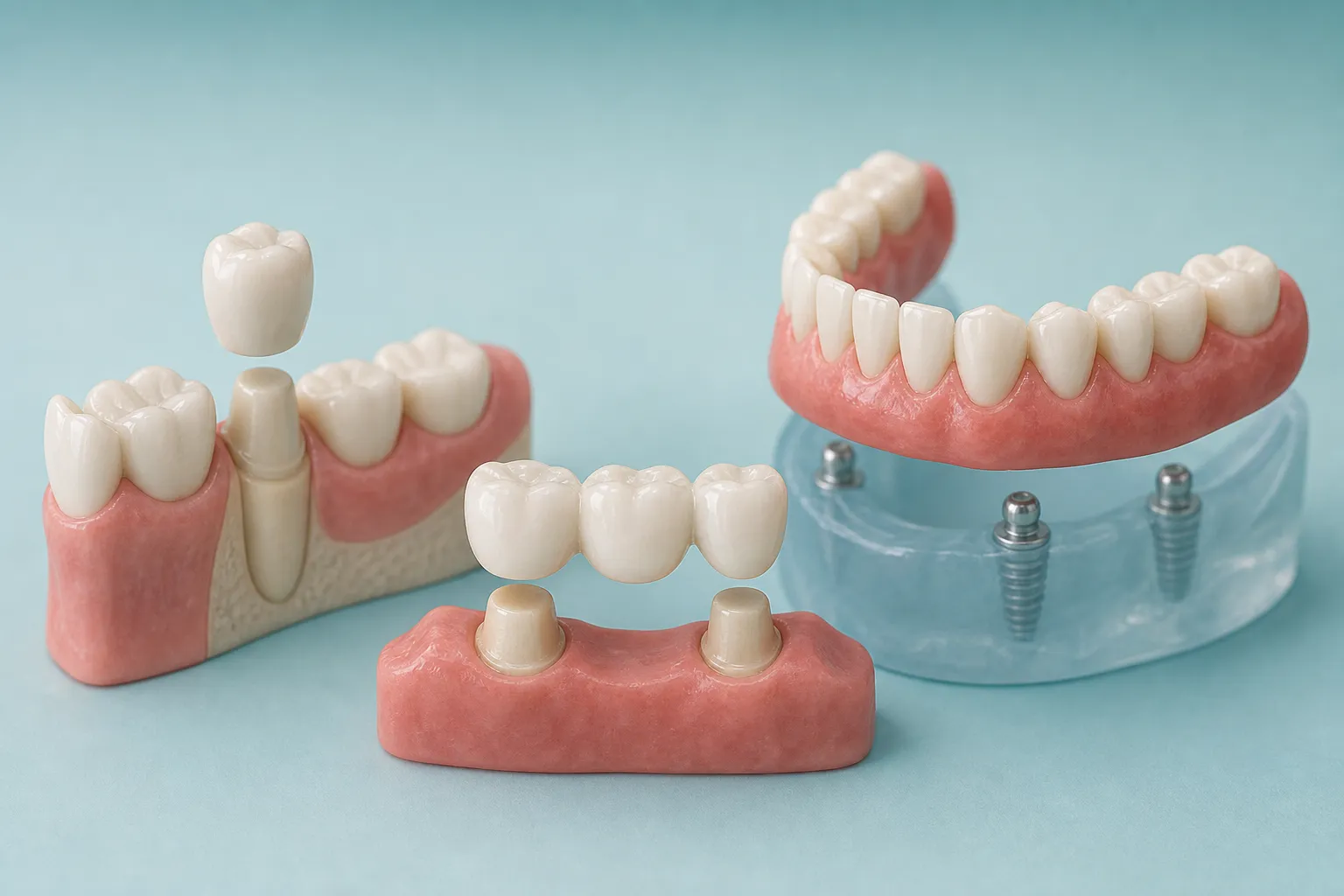
Save it, or pull it?
Keeping your own tooth is usually the better outcome. It preserves the bite you already have, the bone around the root, and the way you chew — and no replacement is quite the same. But some teeth are past saving, and being told so early is better than paying for treatment that fails. If you’re weighing the two right now, how the save-or-pull decision is actually made lays out the findings that settle it and what each path costs over ten years.
A tooth generally can’t be rescued when:
- The root is fractured vertically — a crack running down into the root, which no amount of cleaning repairs
- Decay extends below the bone level, leaving nothing solid for a crown to grip
- Advanced gum disease has already taken the bone support the root depends on
- It has been retreated once and failed again, and the anatomy explains why
If it does come out, decide on the replacement in the same conversation rather than leaving the space. Neighboring teeth drift and the opposing tooth drops down over months, which quietly narrows your options later. We’ll walk through extraction and the realistic ways to replace a missing tooth, from a single dental implant to — where several teeth in one arch are failing at once — a removable overdenture supported by four implants.
What actually drives the cost
- Which tooth. A molar with four canals takes roughly twice the chair time of an incisor and is priced on that difference.
- First treatment or retreatment. Removing old filling material and posts before the real work starts adds significant time.
- Whether a post and core build-up is needed to give a crown something to hold onto.
- The crown is a separate procedure with its own fee. A quote for “a root canal” frequently does not include it. Ask for both numbers before you agree to anything.
- Your plan. PPO plans typically pay a percentage once the deductible is met; HMO plans work from a set copay schedule. Denti-Cal and Medi-Cal cover root canal treatment differently depending on which tooth is involved, subject to program rules and frequency limits — we verify your exact eligibility and what’s authorized before treatment starts, rather than guessing.
- No coverage at all. CareCredit, Cherry and Sunbit spread the cost across months, and our in-house membership plan is built for patients paying out of pocket.
Questions worth asking before you agree
- Is this pulpitis or a cracked tooth? The answer changes how likely treatment is to hold.
- How many canals does this tooth have, and can all of them be reached?
- One visit or two — and what makes it two?
- Does the estimate include the build-up and the crown, or only the root canal?
- If this tooth fails in five years, what is the fallback and what does that cost?
- Would you refer this one to a specialist? A dentist who never refers anything is worth a second thought.
Treatment with Dr. Sameer Aljanedi
Dr. Sameer Aljanedi performs root canal treatment at our Downey office on Paramount Blvd., and you’ll hear the diagnosis in plain language before anything begins — which tooth, why it’s failing, what happens if you wait, and what the alternatives cost. If dental anxiety is the real obstacle rather than the tooth, ask about sedation options. Our team is bilingual; se habla español.
Pain that outlasts the cold drink, wakes you at night, or spikes when you bite is worth an X-ray this week rather than next month — the tooth is easier and cheaper to save before the infection reaches bone. Request an appointment or call (562) 928-5559 and we’ll get you looked at.
FAQ
Frequently asked questions
Does a root canal hurt?
The appointment is done under local anesthetic and is typically no worse than having a filling — the severe pain most people arrive with usually stops within minutes of the pulp being removed. Expect the tooth to feel bruised when you bite for a couple of days afterward. A badly inflamed lower molar can be harder to numb than a healthy tooth; that’s normal and it’s handled with extra anesthetic, so speak up if you feel anything sharp.
How do I know if I need a root canal?
Time the pain. A cold zing that disappears in a second or two is usually sensitivity. Pain that lingers 30 seconds or longer after the cold is gone, arrives with no trigger, wakes you at night, or comes with a pimple-like bump on the gum points to the pulp. Some infected teeth cause no symptoms at all and show up as a shadow at the root tip on a routine X-ray. Testing and an X-ray settle it.
How many visits does a root canal take?
Many teeth are finished in one appointment. A second visit gets added when the tooth is actively draining or badly infected, when canals are calcified or sharply curved, or when we’re redoing a root canal done years ago. Front teeth commonly take 45 to 60 minutes; molars with three or four canals often run 90 minutes or more.
Will antibiotics clear it up instead?
Not on their own. The American Dental Association’s 2019 guideline on urgent dental conditions concluded that for a healthy adult with irreversible pulpitis or an abscess still confined to the tooth, antibiotics are not a substitute for treating the tooth — the canal system has no blood supply left for a drug to reach. Antibiotics have a role when infection has spread beyond the tooth or your medical history calls for them.
Do I really need a crown afterward?
On back teeth, almost always. Teeth that fail after root canal treatment more often split than re-infect, and a crown or onlay covering the cusps is what prevents that split. Front teeth with a small access opening and otherwise solid structure can often be restored with a bonded filling instead. Leaving a temporary filling in for months is how treated teeth get lost.
Is it better to save the tooth or pull it?
Saving your own tooth is usually the better outcome — it keeps your bite, your jawbone and your chewing exactly as they are, and no replacement is quite the same. Some teeth can’t be saved: a vertical root fracture, decay running below the bone, or advanced bone loss from gum disease. If yours is one of them, plan the replacement in the same conversation rather than leaving the gap.