Cosmetic Dentistry
Veneers or Bonding for a Chipped Front Tooth?
A corner of a front tooth goes on a fork, an elbow at a soccer game, or a pistachio shell nobody saw coming. Ten minutes later most people are on their phone comparing bonding against veneers.
They are not really rival treatments. They answer different amounts of damage, and the line between them is far more specific than most cosmetic pages let on.
Bonding or a veneer for a chipped front tooth?
Short answer: A chip that stays inside enamel — roughly one to two millimeters at a corner or along the edge — is usually best handled with composite bonding in a single visit, with nothing permanently removed from the tooth. A veneer becomes the better answer once the break runs into dentin, takes a meaningful share of the biting edge, or when several front teeth need to match in shape and shade.
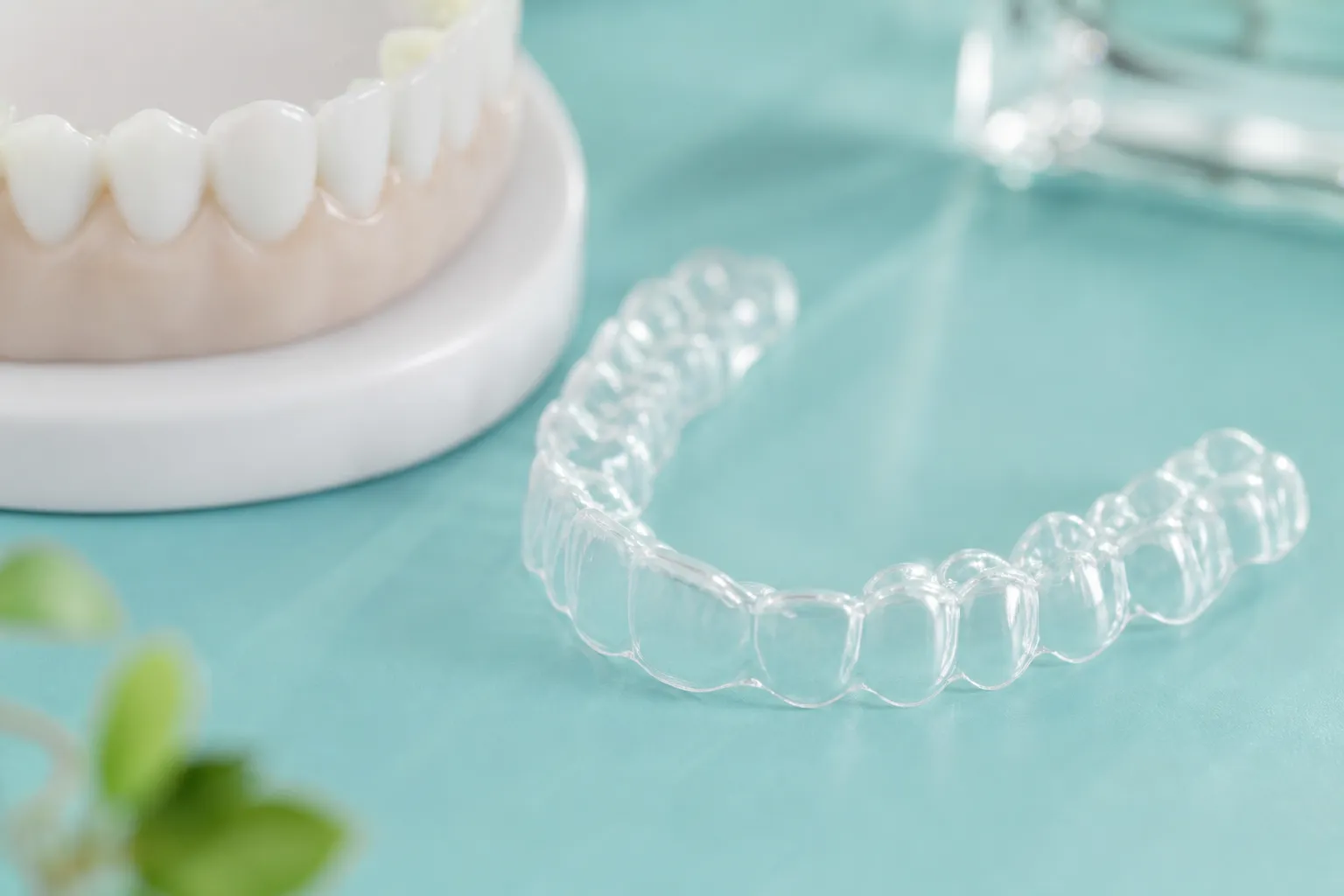
Composite bonding is tooth-colored resin sculpted onto the tooth by hand and set hard with a curing light. A porcelain veneer is a thin shell made in a lab and cemented over the front of the tooth, which almost always means shaving away a fraction of a millimeter of enamel first. One is additive. The other is subtractive, permanently. That single difference drives most of what follows.
How deep the chip goes decides most of it
Chips that stay inside enamel
Enamel along the biting edge of an upper front tooth is only about a millimeter or two thick. A chip that stops inside it has a chalky white break surface, feels rough to the tongue, and does not react to cold air or a sip of water. Nothing is exposed. The repair is purely a question of shape and how light hits the edge.
Sometimes the honest answer here is that you need less than you think. If the edge is uneven but nothing much is actually missing, polishing and recontouring the enamel — a few minutes with a fine disc, no anesthetic, nothing added — can make the chip disappear. Ask about it before you agree to anything bonded. It is the cheapest good outcome in cosmetic dentistry and it gets offered less often than it should.
Chips that reach dentin
Dentin is the softer, yellower layer under enamel, threaded with microscopic tubules running toward the nerve. When a break exposes it, the surface looks yellowish — often a yellow core with a white enamel rim around it — and the tooth starts reacting to cold air, cold drinks, and sometimes just breathing in through the mouth.
That reaction is the signal that matters. A repair at this depth is no longer cosmetic. It seals open tubules, and leaving them open invites sensitivity that worsens and, over months, decay entering where the enamel used to be. Bonding still handles many of these chips well. It just needs to happen within days rather than whenever you get around to it.
Chips near the nerve
Look at the broken surface in good light. A pink or reddish spot in the middle of it means the pulp is exposed or very close to it, and that is a same-day problem rather than a cosmetic one. So is a tooth that seemed fine after the accident and then turned gray or brown weeks later — that discoloration usually means the nerve died from the impact, and no amount of surface work fixes it. Our urgent dental care page covers what to do while you wait for an appointment.
Get seen urgently if… the broken surface shows a pink or red spot, the tooth aches on its own or wakes you at night, it feels loose or has shifted position, the gum around it is swelling, or cold air makes you flinch. Facial swelling that is spreading, especially with fever or trouble swallowing or breathing, is an emergency room visit right now.
One practical thing while you are still at the scene: if you can find the broken piece, keep it. Rinse it gently, put it in milk or a container of your own saliva, and bring it with you. Fragments can sometimes be re-bonded to the tooth, and a real piece of your own enamel matches better than anything anyone can sculpt. The American Dental Association's patient library at MouthHealthy gives similar first-aid guidance for a broken tooth.
Chip size and location: what each one usually needs
| What the chip looks like | Usual recommendation | Why |
|---|---|---|
| Rough or uneven edge, nothing much actually missing, no sensitivity | Polish and recontour | Nothing added, nothing removed, done in minutes |
| Enamel-only chip of about 1–2 mm at a corner or edge | Composite bonding, one visit | Additive and essentially reversible; blends convincingly at this scale |
| Break surface looks yellow, or the tooth reacts to cold air | Bonding, within days | Dentin tubules are open — sealing them is treatment, not cosmetics |
| A third or more of the biting edge is gone | Veneer, with bonding as an interim if needed | Composite at the incisal edge takes leverage on every bite |
| Chip plus a shade you want changed across several front teeth | Veneers, after whitening the rest | Composite matched to today's color will not lighten later |
| Chip plus a crack line running up toward the gum | Exam first; veneer or crown depending on depth | The restoration has to bind the tooth, not just face it |
| Pink or red visible in the break, or the tooth darkens weeks later | Nerve evaluation before any cosmetic work | Pulp involvement changes the entire plan |
| More than roughly half the crown gone, or a root-canal-treated tooth | Full crown | A facing cannot carry the load that whole-tooth coverage can |
Is bonding reversible? Is a veneer?
Bonding is close to reversible. For a small chip repair the tooth is cleaned, etched with a mild acid to roughen the surface, and the composite is built onto what is already there. Nothing is drilled away. If you dislike the result it can be removed and the tooth is essentially back where it started. The asterisk: if your dentist reshapes the neighboring enamel to help the repair blend, that reshaping does not undo.
A veneer is not reversible in any meaningful sense. Preparing a tooth for porcelain commonly removes somewhere in the range of three to seven tenths of a millimeter of enamel from the front and the edge. Thin, but enamel does not grow back. From that point on the tooth needs a covering permanently, and when the veneer eventually fails or you want a different shade, the answer is another veneer — not a return to the original tooth.
None of that is an argument against veneers. It is an argument for climbing the ladder in order: whitening, then recontouring, then bonding, then porcelain, then a crown — and stopping at the first rung that solves the problem. Our cosmetic dentistry overview shows where each option sits relative to the others.
Use bonding as a trial run
Here is something almost nobody suggests. If you are considering veneers partly for shape — longer central incisors, squarer corners, a small gap closed — that shape can be sculpted in composite first. Live with it for a few months. Photograph it. See how it looks in your own bathroom mirror at seven in the morning, not under operatory lights. If the shape is right, the porcelain can be built to copy it. If it is wrong, you have changed nothing permanent and learned something that is expensive to learn later.
How long does bonding last compared with a veneer?
Composite on a front tooth commonly lasts somewhere in the range of four to eight years before it needs repair or replacement. Porcelain veneers commonly run ten to fifteen years, and published survival studies have followed some considerably longer. Those are ranges rather than promises, and what moves them is fairly predictable.
- Where the repair sits. Composite right at the biting edge absorbs leverage on every bite and fails sooner than composite on a flat front surface.
- Whether you grind or clench. This is the biggest single variable for both materials. If you wake with sore jaw muscles or someone tells you that you grind at night, a night guard protects the work you just paid for.
- What you do with your front teeth. Nails, pen caps, ice, tearing packaging open. Anterior restorations lose to all of them.
- Staining. Composite picks up color from coffee, tea, red wine and tobacco, especially along the margin where it meets enamel. Porcelain itself does not stain, though the cement line at the edge can darken over the years.
Failure looks different for each. Bonding usually chips at a corner or discolors at the margin, and is often repaired chairside in a single visit. A veneer more often debonds whole or fractures, and replacing it means preparing the tooth again. Neither one fails on a schedule you get to pick.
Whiten first, then match
Order of operations trips people up constantly. Composite and porcelain do not respond to bleaching gel. Whatever shade they are made to on the day they are placed is the shade they stay. If you have any intention of lightening your teeth, do the whitening first, let the color settle for a couple of weeks, then match the repair to the new baseline. Do it the other way around and you end up with a brighter smile and one stubborn dark spot exactly where everyone looks.
Can you do bonding now and a veneer later?
Yes, and it is often the smarter sequence rather than a compromise. The composite is removed when the tooth is prepared for porcelain, so an interim repair rules nothing out.
Two honest caveats. You are paying for two treatments instead of one, so if you already know you want porcelain across four or six front teeth, the staged route just adds a step. And each re-bond involves etching the surface again; over many cycles across many years, that is not entirely free for the enamel.
Staging genuinely earns its place in a few situations. In the late teens and early twenties the gum margins are still settling, and a veneer margin placed too early can end up visible as the tissue matures — bonding buys those years cheaply. If the chip came from a bite problem that has not been corrected, porcelain placed into that same collision tends to break the same way. And when money is the constraint this year, a well-sculpted composite repair is real dentistry, not a placeholder.
What actually drives the price difference
Fees depend on the tooth in front of us, so we quote in writing after an exam rather than online. The variables behind the number are worth knowing before any consultation.
- Visits and lab work. Bonding is done chairside in one appointment. A veneer involves a scan or impression, a lab fee, a temporary, and a second visit.
- How many teeth. Matching a single central incisor to its untouched twin is the hardest job in single-tooth cosmetics. Plenty of cases end up treating both centrals for symmetry, which changes the arithmetic.
- Material and technique. Ceramics differ, and a hand-layered veneer costs more than a pressed one.
- What has to happen first. Whitening, gum recontouring, or orthodontic movement all sit upstream of the cosmetic work.
- How the treatment is coded for insurance. This is the wrinkle nobody explains. A purely cosmetic veneer is excluded by essentially every plan. A composite restoration on a front tooth that has genuinely lost structure is often billed as restorative rather than cosmetic and may attract partial benefit. Denti-Cal and Medi-Cal generally follow the same logic — anterior resin restorations for real tooth loss can be a benefit, cosmetic veneers are not. Confirm the specifics with our Downey front desk before you plan around them.
If the tooth is broken down further than a facing can handle — more than roughly half the crown gone, or a tooth that has already had root canal treatment — the conversation moves to a full crown instead, and the coverage rules move with it.
Four questions to ask before you agree to anything
- Does this chip reach dentin? That answer, not the size in millimeters, is what separates a cosmetic repair from a necessary one.
- Would recontouring alone fix the shape? Sometimes it would, and it costs the least of anything on the menu.
- If I choose bonding, how much enamel gets touched? For most small chips the answer should be none.
- How many teeth need treating to make this look natural? One chipped tooth does not always mean one treated tooth, and you deserve to hear that up front.
Bring the tooth in and find out what it actually needs
A chipped front tooth is easy to examine and hard to guess about from a photo. Dr. Sameer Aljanedi will check whether the break reaches dentin, test the nerve, and tell you plainly whether bonding solves it or whether porcelain is the better use of your money. Our Downey team is bilingual and se habla español — book a visit or call (562) 928-5559.
Have questions about your smile?
Dr. Sameer Aljanedi and the team at Rio Hondo Dental Office are here to help. Se habla español.