Restorative Dentistry
Do I Need a Crown or Just a Filling?
Your dentist studies the X-ray, looks back at the tooth, and says it needs a crown. You were braced for a filling. The visit is longer, the cost is higher, and the question forming in your head is whether the crown is genuinely necessary or simply the bigger sale.
Fair question. There are specific criteria behind that call, and you are entitled to hear them out loud.
Crown or filling: how dentists actually decide
Short answer: A filling works when enough solid tooth remains to hold it and to survive chewing on its own. A crown becomes the better choice once the remaining walls are too few or too thin to support themselves — commonly when two or more walls are gone, a cusp is undermined, a crack is present, or the tooth has had root canal treatment.
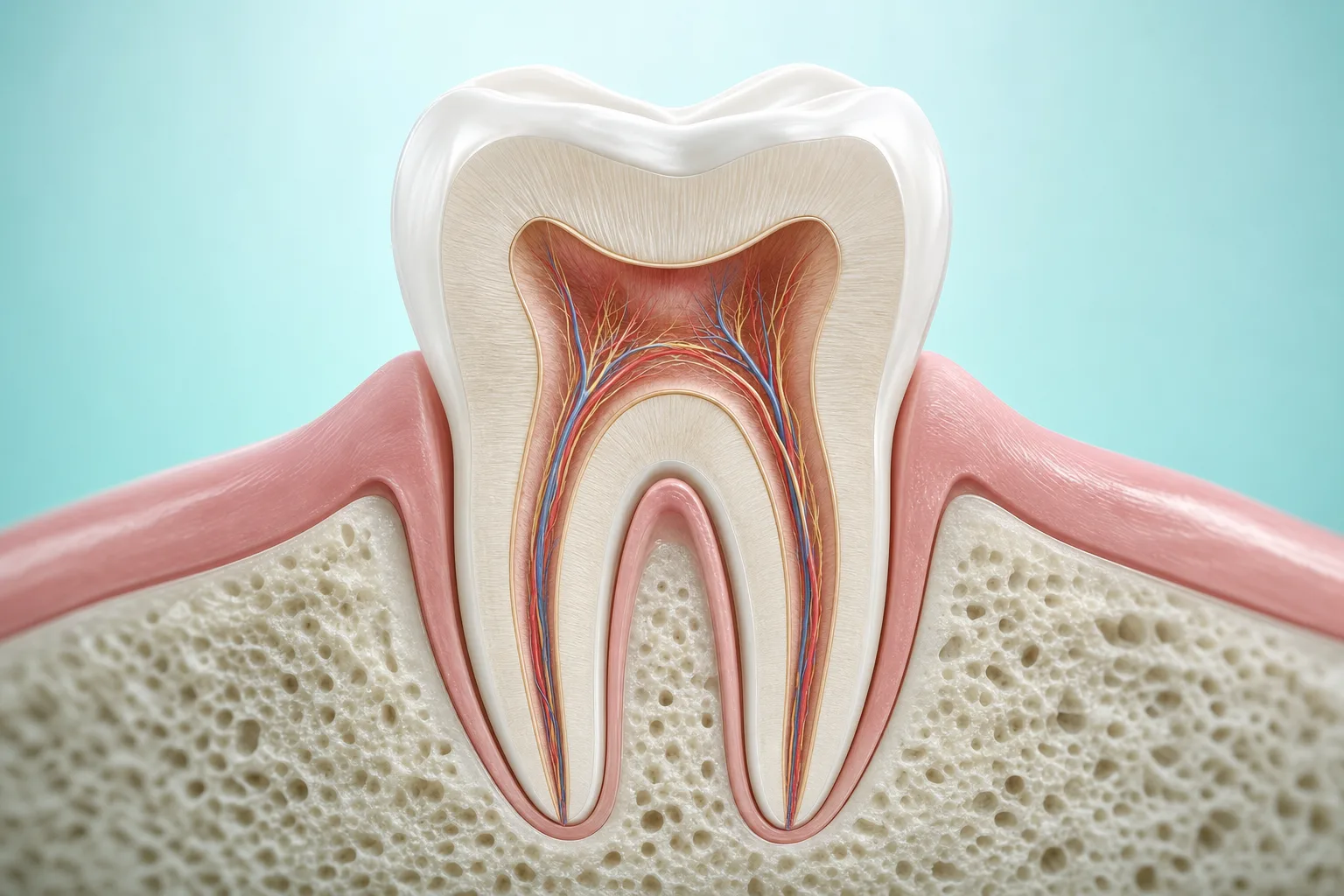
The difference is mechanical, not cosmetic. A filling sits inside the tooth and leans on the walls around it. A full-coverage crown sits over the tooth and holds those walls together. So the real question is never how big the cavity looks on the film. It is whether what remains of this tooth can carry a chewing load by itself.
The four things your dentist is measuring
1. How many walls are still standing
A molar has four walls around its chewing surface: front, back, cheek side, tongue side. Lose one to decay or an old restoration and a bonded filling usually holds up fine. Lose two and it becomes a judgment call. Lose three and the filling has almost nothing to anchor against — every bite tries to wedge the surviving structure outward. Most dentists start moving toward coverage somewhere between the second and third wall, and the tie-breakers are how hard you bite and whether you clench or grind at night.
There is a related measurement patients rarely hear about. When the prepared area gets wide relative to the distance between the cusp tips, fracture risk climbs steeply. A narrow slot between two thick walls behaves very differently from a broad hollow with two thin ones, even when both are called "a large filling."
2. How thin the remaining cusps are
Wall count is only half the picture. Thickness matters as much. A cusp hollowed out from underneath — by decay creeping sideways along the dentin, or by a decades-old silver filling that has slowly wedged the tooth apart — can look perfectly intact from above and still be a shell. A common working threshold is that a cusp thinner than roughly two millimetres at its base is treated as unsupported: it gets reduced and covered rather than left to snap later.
This is the most frequent reason a tooth that "looks fine" earns a crown recommendation, and it is the one most worth questioning out loud. Ask to see it. Most offices can show you an intraoral photo or a scan on the screen, and an undermined cusp is visible once someone points at it.
3. Whether there is a crack, and where it runs
Cracks change the math, because a crack does not stay the size it is. Each bite flexes the segments apart a fraction of a millimetre, and over months that flexing drives the crack deeper. A crack confined to a wall is usually manageable with cuspal coverage — the restoration binds the tooth so it stops flexing. A crack running across the floor of the preparation, into the pulp chamber, is a different conversation entirely: that tooth may need root canal treatment first, and in some cases it cannot be saved.
Hairline cracks often do not appear on an X-ray at all, which is why the diagnosis usually comes from a bite test rather than an image. One detail helps enormously: if the tooth hurts on release of biting pressure rather than while you clamp down, mention it. That pattern points strongly at a crack, and it is easy to miss if nobody asks. Our longer piece on pain that shows up when you bite walks through the other causes worth ruling out.
4. Whether the tooth has had root canal treatment
A tooth that has been through root canal therapy has had its pulp chamber opened from the top, which removes structure from the middle of the tooth and leaves the cusps standing more or less alone. Back teeth in that condition are much more likely to fracture than untreated ones, and the evidence for covering them is strong enough that most dentists treat it as routine rather than optional, and the American Dental Association's patient library at MouthHealthy describes the same reasoning. Front teeth are a different case — more on that below.
Filling, onlay, or crown: matching the restoration to what is left
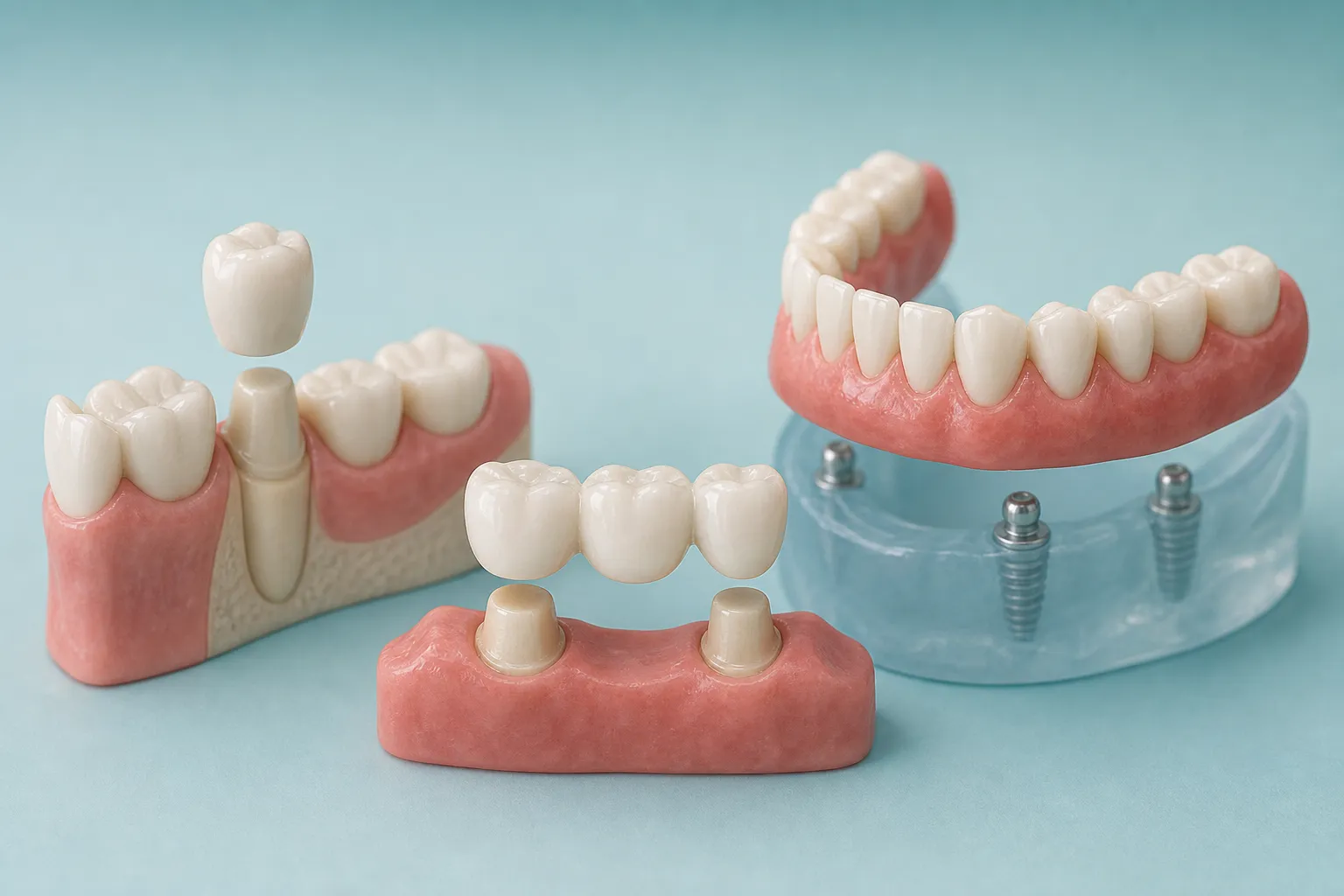
There is a middle option many patients are never offered by name. An onlay covers only the damaged or undermined cusps and leaves the healthy walls untouched, which preserves more natural tooth than a full crown does. It is not right for every situation, but if you are being told "crown" for a tooth with two or three healthy walls, it is a reasonable thing to ask about. We compare the options in detail in our guide to restoring a cracked tooth.
| What is left of the tooth | Usual recommendation | Why |
|---|---|---|
| One wall involved, cusps thick and intact | Direct filling | The surrounding walls carry the load; bonded composite is enough |
| Two walls involved, cusps still substantial | Large filling or onlay — a judgment call | Bite force, grinding history and the width of the prep decide it |
| A cusp undermined or thinner than about 2 mm at its base | Cuspal coverage: onlay or crown | An unsupported cusp is the piece that eventually snaps off |
| Three or more walls gone | Crown, usually over a buildup | Too little structure remains to anchor a filling reliably |
| Crack line visible in a wall | Onlay or crown | Full coverage binds the segments and stops the flexing |
| Crack crossing the floor of the preparation | Guarded — root canal treatment or extraction may follow | The crack has reached the pulp chamber; prognosis drops sharply |
| Back tooth after root canal treatment | Cuspal coverage | Treated molars and premolars survive far longer when covered |
You likely need a crown if…
- A cusp has already broken off, or the tooth has a jagged edge you can feel with your tongue.
- An old amalgam takes up most of the chewing surface and the walls around it look grey or translucent.
- The tooth aches on releasing a bite, or you get a sharp zing only on certain foods at certain angles.
- You have had root canal treatment on a back tooth and are still wearing a temporary.
- The tooth has already been filled twice and the filling keeps failing at the same margin.
You probably do not need one if the decay is confined to one surface, the walls are thick, nothing hurts on biting, and no crack line is visible under magnification. A conservative filling in that tooth is good dentistry, not a shortcut.
Do you always need a crown after a root canal?
No — and this is where blanket advice does patients a disservice. Molars and premolars carry the heaviest grinding forces and have had the most structure removed during access, so cuspal coverage is the standard recommendation for them. An upper front tooth with intact walls and a small access opening is a different matter: it often does well with a bonded restoration alone, and covering it means removing sound enamel for no structural gain.
What does matter for every treated tooth is timing. A temporary filling is not a sealed restoration, and leaving one in place for months invites bacteria back down the canals. If the plan calls for a crown, the interval between finishing the root canal and seating the final restoration should be measured in weeks.
What happens if you take the cheaper filling anyway
Sometimes that is a defensible choice. Money is real, cash flow is real, and a well-placed large filling in a tooth with reasonable walls may serve you for years. What you should understand is the specific failure mode, because it is not "the filling falls out."
The usual outcome is that a cusp fractures. Where the fracture line lands decides everything that follows. Break above the gumline and the tooth is still restorable — you end up paying for the crown you deferred, plus the filling you already bought. Break at or below the gumline and the options narrow fast: gum surgery to expose enough tooth to grip, or extraction and a conversation about replacing the tooth. That is the gamble in plain terms. Not "crown now versus filling forever," but "crown now versus crown later, with a real chance of losing the tooth in between."
A fracture also tends to happen at the worst possible moment, on a weekend, mid-meal. Our urgent care page covers what to do in the meantime.
Get seen urgently if… the tooth throbs and wakes you at night, your face or gum swells, a pimple-like bump appears on the gum near the tooth, or a piece breaks off and leaves a sharp or painful edge. Swelling that is spreading, especially with fever or difficulty swallowing or breathing, belongs in an emergency room now — not on Monday's schedule.
Can a large filling be turned into a crown later?
Yes, in most cases, and the money is not thrown away. When the crown is eventually prepared, the existing filling material usually stays put and becomes the core — the foundation the crown is shaped over. So a filling placed today frequently does double duty as tomorrow's buildup.
The catch is what happens in the interval. If the tooth fractures before you get there, or if decay tracks under the margin unnoticed, the starting point for the crown is worse than it is today. Ask your dentist directly: if this filling fails, is this tooth still crownable? That answer, more than the price difference, should drive the decision.
Coverage: crowns on back teeth under Denti-Cal and PPO plans
Coverage rules shape this decision more than most people expect, and back teeth are where the wrinkles live.
Under Medi-Cal Dental, adult crown benefits on posterior teeth are commonly met with a prefabricated crown — a preformed stainless steel cap seated the same day — rather than a lab-processed porcelain one. Lab-fabricated crowns are generally more restricted and typically run through prior authorization. That is not a small distinction: a prefabricated crown protects the tooth and is legitimate treatment, but it is metallic and is fitted to the tooth rather than custom-milled for it. Benefit rules change, so confirm current specifics with our front desk or with the state program before you plan around them. Our Denti-Cal and Medi-Cal page explains what we accept.
PPO plans work differently. Crowns are almost always classified as a major service, which commonly means coinsurance around half the allowed fee, a waiting period on new policies, and an annual maximum that a single crown can consume a large share of. Two clauses catch people out: a replacement frequency limit — a plan may not pay for a new crown on the same tooth within a set number of years — and an alternate benefit provision, where the plan pays toward a less expensive material and bills you the difference. We break the specifics down by carrier in our guide to what dental insurance pays toward crowns, and CareCredit, Cherry and Sunbit exist for the gap.
Four questions worth asking before you agree
- How many walls are left, and how thick are they? A dentist who can answer with a number is applying criteria, not a template.
- Can you show me on the photo or the scan? Undermined cusps and crack lines are visible once someone points them out.
- Would an onlay work here instead? If not, the reason should be concrete — a wall that is gone, a crack in a particular place.
- If I choose the filling, what is the realistic outcome and how would we monitor it? A straight answer here tells you a great deal about the practice.
Get a second look before you commit
If someone has told you a tooth needs a crown and you would like the reasoning shown to you rather than summarized, Dr. Sameer Aljanedi will examine the tooth, show you what is left of it, and lay out the options before anything is drilled. Our Downey team is bilingual and se habla español — schedule a visit or call (562) 928-5559.
Have questions about your smile?
Dr. Sameer Aljanedi and the team at Rio Hondo Dental Office are here to help. Se habla español.