Emergency Care
My Crown Fell Off: What to Do Until You Can Be Seen
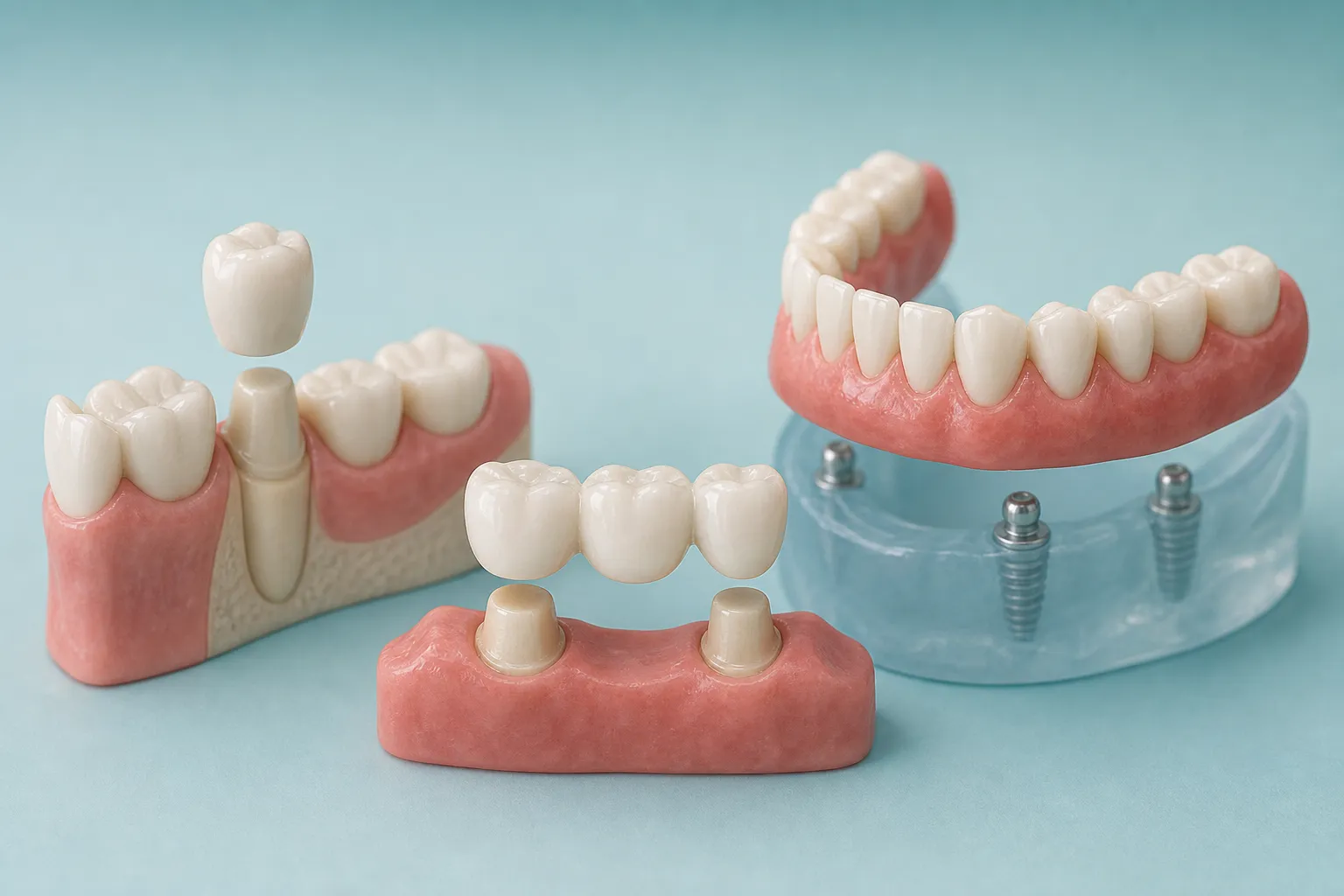
The crown is in your hand, or wrapped in a napkin, or you just picked it out of a piece of caramel. Your tongue keeps going back to the stub of tooth where it used to sit. Take a breath. This is rarely a true emergency, and what you do in the next hour matters more than how quickly you reach a dentist tonight.
Is a crown falling off a dental emergency?
Short answer: Usually not. A crown that comes off without severe pain, swelling or bleeding is urgent rather than an emergency: plan to be seen within a few days, not a few weeks. Keep the crown, keep the tooth clean, chew on the other side, and never put it back with superglue. Facial swelling, fever or trouble breathing changes the picture.
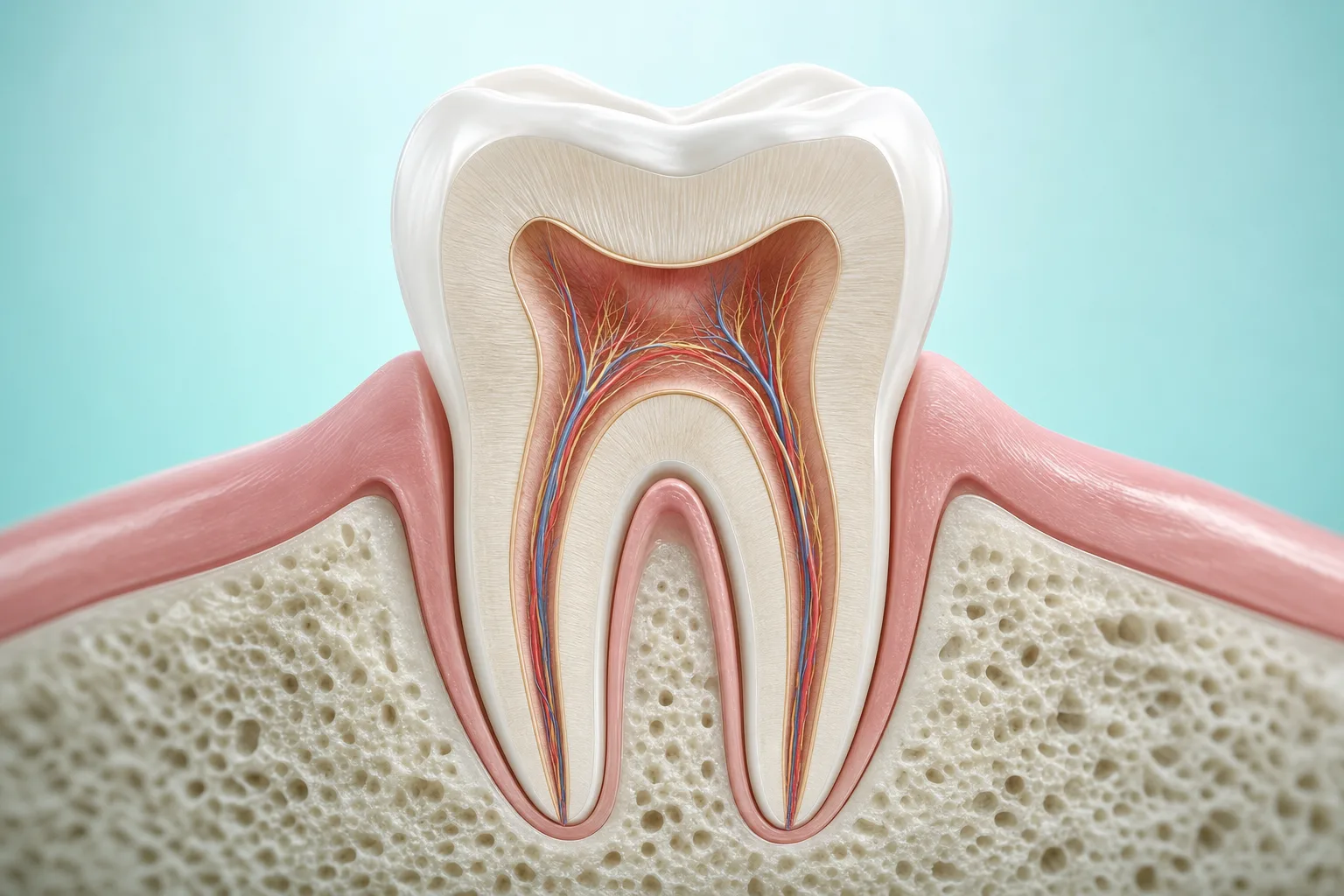
A dental crown is a cap cemented over a tooth that was shaved down to hold it. Once the cap is gone, that prepared tooth is exposed: smaller than a natural tooth, mostly dentin, and never designed to chew by itself. So "it doesn't hurt, I'll deal with it next month" is the wrong plan even when tonight is calm. Not sure which side of the line you are on? Our guide to what counts as a dental emergency spells out the dividing lines.
Get seen urgently if… your face or gum is swelling, you have a fever, the pain is severe and not settling with over-the-counter medication, or the area will not stop bleeding. If the crown vanished and you are now coughing, wheezing or short of breath, you may have inhaled it. Go to an emergency room, not a dental office.
What to do right now: first-night steps
- Find the crown and get it out of your mouth. If you swallowed it, it will usually pass without trouble in a few days. Tell your dentist, and call your doctor if you develop stomach pain or vomiting.
- Look inside it. A hollow crown, like an empty thimble, is the good result: only the cement let go. If the inside is packed with something solid, or a pin is sticking out of it, part of the tooth or its core broke off too. Do not try to put that one back. Skip to step 6.
- Clean the crown and the tooth. Close the sink drain first. Rinse the crown and brush out loose cement with a soft toothbrush. No bleach, no boiling water, no scraping with a pin. Brush the tooth gently and rinse with warm salt water.
- Test the fit dry. A crown goes on in exactly one orientation. Slide it into place with light finger pressure and close slowly. If your teeth meet the way they always have, it is seated. If the bite feels high or the crown rocks, take it off and leave it off. Forcing it can crack what is left of the tooth.
- If it seats, hold it with temporary dental cement. Most pharmacies stock it in the dental aisle. Dry the crown, run a thin layer around the inside, seat it, bite gently for a minute and wipe away whatever squeezes out. Nothing open? A dab of denture adhesive, or even toothpaste, will hold for a few hours. When you floss, pull the floss out sideways instead of snapping it back up.
- If it will not seat, protect the tooth instead. Put the crown in a small hard container. A pill bottle beats a tissue, because tissues get thrown away. A smear of temporary cement or orthodontic wax over the tooth takes the edge off cold and air.
- Eat and sleep carefully. Chew on the other side and skip anything sticky, hard, very hot or very cold. If the crown is sitting on without cement, or feels even slightly loose, take it out before bed. A crown that comes off while you sleep can be swallowed or inhaled.
- Call a dentist when the office opens. Say the crown is off and whether you are in pain. Bring the crown with you.
Dealing with something else as well, such as a cracked or knocked-out tooth? The American Dental Association's MouthHealthy page on dental emergencies is a reliable first-aid reference.
Why you should never use superglue
People try it every week. Household glue is not made for living tissue and can irritate both the gum and the nerve inside the tooth. It also sets in seconds, nearly always with the crown a hair out of position, which leaves your bite high and the edges open to leakage. Whatever was underneath (bacteria, decay, last night's dinner) is now sealed in.
Then comes the part that costs money. A superglued crown often has to be cut off, so a crown that could have been re-cemented in a short visit becomes one that needs replacing.
Pharmacy cement has limits too. It buys you days, not months.
Can the same crown be cemented back on?
Often, yes. The answer depends on what is underneath, which takes an exam and usually an X-ray. The dentist looks inside the crown, because where the old cement ended up hints at why the bond failed. Then the tooth gets probed for soft, decayed dentin and measured for how much of it is still standing. The crown is seated again to see whether its edge closes tightly all the way around, and your bite is checked for the heavy contact and wear marks that point to grinding.
| What the dentist finds | What usually happens |
|---|---|
| Crown intact, tooth solid and clean, cement simply failed | Both are cleaned and the same crown is re-cemented, typically in one short visit |
| Small decay at the edge | Decay is removed; the crown is sometimes re-used, but often replaced because the seal has changed |
| Decay that has hollowed out the tooth | The tooth is rebuilt and gets a new crown; deep decay can mean root canal treatment first |
| Core or a piece of tooth came off inside the crown | New build-up, sometimes with a post, then a new crown, provided enough sound tooth remains above the gum |
| Tooth broken at or below the gumline | Gum reshaping to expose more tooth, or extraction and replacement, depending on what is left |
| Crown cracked or worn through | New crown |
When the verdict is a new crown, it rests on the same structural logic that decides whether a tooth needs a crown or a filling in the first place: what is left, and can it carry a load. Ask to be shown, on the X-ray or in a mirror.
Why did my crown come off?
The caramel gets the blame. It is almost never the real cause. Sticky food finishes a job that started months earlier.
- Decay underneath. A crown cannot get a cavity, but the tooth at its edge can. Once decay softens the dentin the cement was gripping, the crown has nothing to hold on to. This is the usual story when a crown lasts many years and then lets go.
- A short or tapered tooth. Crowns stay on mostly because of geometry: tall, nearly parallel walls that the crown slides over like a snug lid. Cement fills the gap and seals it. It was never meant to resist sideways force alone, and a short back molar or a cone-shaped preparation gives the crown very little to grip.
- Old cement. Some cements slowly wash out at the edge over the years, faster with a dry mouth or a steady intake of acidic drinks.
- Grinding and clenching. Night grinding pushes a crown sideways again and again until the seal breaks.
- It was a temporary. Temporary crowns are held with weak cement on purpose. If yours came off while the permanent one is being made, still call. The tooth can drift within days, and then the permanent crown does not fit.
A crown that keeps coming off is a design problem, not a glue problem
If the same crown has been re-cemented twice and is in your hand again, stronger cement is not the answer. Something about the design is wrong. The tooth is too short, the walls lean in too much, the bite strikes it at an angle, or there is decay nobody has dealt with.
Real fixes change the mechanics:
- rebuilding the core so the tooth stands taller;
- exposing more tooth with a minor gum procedure called crown lengthening;
- cutting grooves into the preparation for extra grip;
- remaking the crown in a ceramic that can be bonded to the tooth instead of only cemented;
- adjusting the bite, and wearing a custom night guard if grinding is the driver.
Each has a drawback: more time, more cost, sometimes the new crown you hoped to avoid. But gluing a crown back onto a tooth that cannot hold it only schedules the next time it falls off.
What if the crown was on an implant, or a post came out with it?
Implant crowns
A loose implant crown is a different mechanical event. Usually the small screw that connects the crown to the implant has backed out, or the cement between the crown and its connector has failed. It rarely hurts, because there is no nerve.
Do not use pharmacy cement here and do not try to tighten anything yourself. Stray cement under the gum around an implant can inflame the tissue and the bone, and chewing on a wobbly implant crown can bend or snap the screw. If the crown lifts out freely, store it and call. Commonly the repair is cleaning the parts and tightening or replacing the screw. If the part anchored in the bone feels loose, say so on the phone, because that needs a prompt look. Our implant maintenance guide covers how to protect that work long term.
Crowns with a post
A metal or fiber pin sticking out of the crown means the tooth had root canal treatment and the post came out with the core. These teeth do not hurt when the crown comes off, and that is the trap. People wait. Meanwhile saliva is leaking into a canal that was sealed, and a root that has already lost most of its structure is taking bite forces with nothing bracing it.
Do not push the post back in. The root has to be checked for a crack before anyone can say whether it can be rebuilt.
What happens to the tooth if you wait weeks
- The first few days. If the tooth is alive, expect sensitivity to cold, air and sweets. The gum around it gets sore as food packs in. This is the window when re-cementing the same crown is most likely to work.
- One to three weeks. Teeth move. The neighbors tip toward the space and the opposing tooth drifts into it. The distances are tiny, but a crown is made to a fit measured in fractions of a millimeter. One that would have gone straight back on now sits high, or will not seat at all.
- A month and beyond. Exposed dentin decays much faster than enamel, and the thin walls of a prepared tooth chip or split under chewing. A break that runs below the gumline can turn a simple re-cement into a root canal and post, or into an extraction.
None of this runs on a fixed clock. Some people get away with months. Most would rather not pay to find out.
What it costs, and what insurance does with it
The shape of the bill is simple: re-cementing an intact crown is a minor procedure, and a new crown is a major one. What moves you from one to the other is everything above, meaning decay, a broken core, or a crown that no longer fits. Insurance adds a wrinkle. Many plans pay toward replacing a crown only after it reaches a certain age, commonly somewhere between five and ten years, so the date the original was placed matters. Our guide to how PPO and HMO plans cover crowns explains those replacement rules.
Crown in a pill bottle? Bring it in
Rio Hondo Dental is open Monday through Thursday 10 AM to 7 PM, Friday 9 AM to 6 PM and Saturday 8 AM to 2 PM. Call (562) 928-5559 once we open, tell us the crown is off and whether you are in pain, and we will find the soonest time Dr. Sameer Aljanedi can look at it. Se habla español. You can also request a visit online, or read how we handle urgent dental visits in Downey.
Have questions about your smile?
Dr. Sameer Aljanedi and the team at Rio Hondo Dental Office are here to help. Se habla español.