Dental Implants
What Disqualifies You From Getting Dental Implants?
Almost nothing on the internet's list of implant disqualifiers is actually a disqualification. Smoking, diabetes, osteoporosis pills, being 72 — those change how a case is planned and what the odds look like. They rarely close the door. The genuine hard stops are a short list, and most people typing this question into a search bar do not have one.
What actually disqualifies you from dental implants?
Short answer: Outright disqualifications are rare. The main ones are high-dose intravenous antiresorptive therapy for cancer, recent or high-dose radiation to the jaws, an unstable medical condition such as a very recent cardiac event, and a jaw that is still growing. Smoking, diabetes, osteoporosis, thin bone and age are risk factors — they shape the plan rather than end it.
Absolute versus relative: the distinction most lists skip
Dentistry borrows two words from medicine here and they do not mean the same thing. An absolute contraindication means the surgery should not go ahead — the risk of harm outweighs what you would gain. A relative contraindication means it can go ahead, with modifications, once you have been told plainly what it does to your odds. Nearly every alarming item on a candidacy listicle belongs in that second group.
The difference decides what you do next: an absolute contraindication points you toward a different way of replacing the tooth, a relative one toward a longer conversation, a note from your physician, or a few months' delay. Either way, a real candidacy workup for implant treatment means a 3D scan, a periodontal chart and a complete medication list — not a look at your smile and a quote.
| Usually an absolute no, or a firm not yet | A risk factor that changes the plan, not the answer |
|---|---|
| High-dose intravenous antiresorptive therapy at cancer dosing (zoledronic acid, denosumab) | Oral bisphosphonates prescribed for osteoporosis |
| Radiation to the jaws, recent or at high dose | Osteoporosis itself, managed without complications |
| Active chemotherapy or an unstable malignancy | Well-controlled type 1 or type 2 diabetes |
| Heart attack or stroke within roughly the past six months | Managed high blood pressure and most blood thinners |
| A jaw still growing — often into the late teens or early twenties | Being 65, 75 or older and in reasonable health |
| Diabetes that is genuinely uncontrolled, with repeated infection and slow healing | Smoking or vaping |
| Active infection or abscess at the planned site | Gum disease that has been treated and is stable |
| An untreated bleeding or clotting disorder | Thin, short or resorbed bone that can be rebuilt |
| No realistic way to attend follow-up or clean the implants | Nighttime clenching and grinding |
Can I get dental implants if I smoke or vape?
Yes, and you should know the number before you spend the money. Published reviews commonly put implant failure in smokers at roughly two to three times the rate seen in non-smokers, with the gap wider in the upper jaw where bone is softer to begin with. Nicotine narrows the small vessels feeding the healing bone, and smokers show more bone loss around the implant neck over the years and more peri-implantitis — the infection that ends implants long after they were declared a success.
What most offices ask for is a window, not a lifetime commitment: stop for about a week before surgery and roughly eight weeks afterward, covering the period when the implant integrates. That is a demanding request, and pretending otherwise helps nobody. But it is a request, not a rejection.
Vaping gets treated as the safe alternative and there is no good evidence that it is. Long-term implant data on e-cigarettes is thin, but the nicotine and the vasoconstriction are identical. Tell your dentist you vape — plenty of patients answer "no" to the smoking question and never mention it.
Can I get implants with diabetes?
Controlled diabetes is not a disqualification. When blood sugar is well managed, implant survival in people with type 1 or type 2 diabetes tracks close to everyone else's in most published series. Uncontrolled diabetes is a different situation — high circulating glucose slows wound healing, impairs the immune response and raises infection risk at exactly the wrong moment.
The practical dividing line most teams use is HbA1c. Many will proceed comfortably below about 7 percent, proceed with tighter follow-up and sometimes antibiotic coverage in the 7 to 8 percent range, and want to defer and coordinate with your physician above that. Nobody is gatekeeping for its own sake. A number in the wrong place changes the healing timeline and the failure rate, and it is fixable — which is why deferring three months is often the better deal than pushing ahead.
Diabetes and gum disease also feed each other in both directions, so stabilizing the gums before surgery does double duty. Active periodontal disease anywhere in the mouth needs treating first regardless of your A1c.
Do bisphosphonates or osteoporosis medications rule out implants?
This is where the internet is least useful, because it collapses two very different situations into one word. What matters is the route and the dose.
Oral bisphosphonates — alendronate, risedronate, ibandronate, taken as a weekly or monthly tablet for osteoporosis — carry a low risk of medication-related osteonecrosis of the jaw after dental surgery. Published estimates commonly sit well under one percent. Most patients on these medications can have implants placed after a discussion of the risk. Duration nudges the conversation: several years of continuous therapy, especially alongside corticosteroids, is when many clinicians start weighing the case more carefully.
Intravenous antiresorptives at oncology dosing — zoledronic acid or denosumab given to manage bone metastases or multiple myeloma — are a different category. The osteonecrosis risk after jaw surgery is meaningfully higher, and elective implant placement is generally avoided.
Two traps come up constantly. The first is denosumab, sold as Prolia for osteoporosis: it is an injection every six months rather than a pill, and patients routinely leave it off the medication list because they do not think of it as medication. Bring the name. The second is stopping the drug on your own. A "drug holiday" before dental surgery is contested in the literature and the fracture risk of stopping is real — that call belongs to your prescribing physician, not to you and not to your dentist alone.
Osteoporosis by itself, without antiresorptive complications, is not a disqualification. Jawbone quality does not track hip and spine density as neatly as people assume, and plenty of patients with an osteoporosis diagnosis have perfectly workable bone where the implant is going.
Get seen urgently if… you take or have taken an antiresorptive medication and an area of exposed bone in your jaw has not healed over within about eight weeks, or you develop jaw swelling, numbness of the lip or chin, pus, or a tooth that has become loose in that area. Facial swelling with fever, trouble swallowing or trouble breathing is an emergency room visit right now, not a dental appointment.
Am I too old for dental implants at 65 or 75?
No. The position the American Dental Association takes in its patient library is the one that holds up clinically: health status matters far more than the number of birthdays, and there is no upper age cutoff for implant surgery. A healthy 78-year-old is often a better candidate than a 45-year-old with unmanaged diabetes who smokes a pack a day. It is also the age group where the need concentrates — CDC surveillance puts complete tooth loss among adults 65 and over at roughly one in six.
What genuinely changes with age is not bone. It is the surrounding picture: a longer medication list to cross-check, whether you can sit comfortably through a long appointment, whether arthritic hands can manage the cleaning day after day, and whether a six-to-twelve-month sequence is how you want to spend the next year. Appointment length at least has an answer — sedation options exist for people who cannot tolerate long visits.
Being too young is the more common age problem, and it is genuine. An implant fuses to bone and then stays exactly where it was placed while the jaw keeps growing around it, leaving the tooth stranded below its neighbors years later. Skeletal growth commonly finishes in the late teens for girls and somewhat later for boys, assessed case by case rather than by birthday.
What if the scan shows I do not have enough bone?
This is the most common "no" people actually receive, and it is almost always a "not yet."
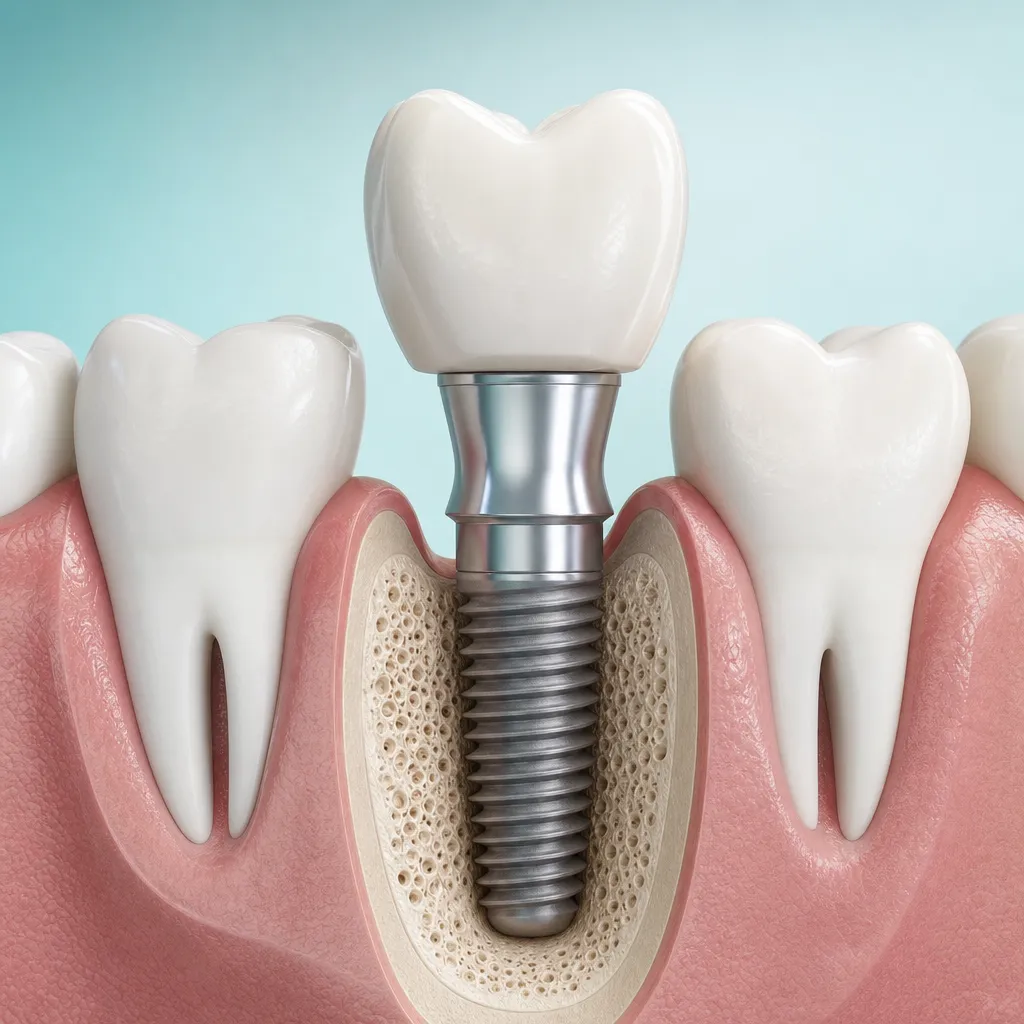
An implant needs bone in three dimensions: height, so the fixture does not run into the nerve canal below or the sinus floor above; width, so solid bone remains on the cheek and tongue sides; and enough density to be stable the day it goes in. As a rough guide, many systems want around 10 mm of height and 6 mm of width for a standard-diameter implant, leaving 1.5 to 2 mm of bone around the fixture. Requirements vary by system and by site, which is why a CBCT scan gets measured rather than eyeballed.
When the measurement falls short, the options are more numerous than patients are usually told:
- Socket preservation — a small graft placed at the time of extraction, preventing much of the collapse before it happens.
- Ridge augmentation — rebuilding width or height in a site that has already resorbed.
- Sinus lift — raising the sinus floor in the upper back jaw to create vertical room.
- A shorter or narrower implant — modern designs allow sizes that did not exist a decade ago.
- A different position or angle — sometimes the bone sits a few millimetres from where the tooth used to be.
The honest drawbacks: grafting is a second surgical procedure, more cost, and typically another three to nine months before the implant goes in. Grafts occasionally fail to take, and sinus procedures carry their own small set of complications. That is not a reason to avoid grafting when it is the right call — it is a reason to ask for the full timeline and the full number first. Our overview of bone grafting for implants covers when each technique applies, another piece walks through what graft recovery actually feels like, and the week-by-week healing timeline lays out the whole sequence.
The disqualifiers that are about habits, not diagnoses
Three things sink implants that never appear on a medical history form.
Untreated gum disease. The bacteria that destroyed bone around your natural teeth will treat a titanium implant the same way, and peri-implantitis is harder to treat than periodontitis because an implant surface is not a root surface. Placing implants into an unstable periodontal condition builds the plan on sand. Stabilize first, then place.
Heavy nighttime grinding. Clenching is not a contraindication — it is a design problem. Natural teeth have a ligament that senses pressure and makes you back off; an implant does not, so it absorbs the full force. The answers are protective: a night guard, sometimes an extra implant to spread the load, sometimes a different material on the biting surface. Our piece on how stress shows up in your teeth covers the pattern, and a custom night guard is usually part of the plan.
No plan for maintenance. Implants cannot decay, which patients often hear as "implants cannot fail." They fail quietly, over years, through the gums and bone around them. If cleaning around them and showing up for maintenance visits is not realistic, that genuinely belongs on the disqualification list — and it is the one item entirely within your control. Our guide to keeping an implant healthy is worth reading before you commit, not after.
What to do about a no
Most nos are conditional. Sort yours into "not ever" or "not yet," because the second one has a route through it.
- Get medically ready. An A1c brought into range, a smoking break through the healing window, a medication reviewed with your physician — these move people out of the relative column within a few months.
- Build the site. If bone is the only obstacle, grafting is the answer and the wait is finite.
- Use fewer implants. A full arch does not need an implant per tooth. Fewer, well-placed fixtures can carry a complete arch, which lowers both the bone demand and the surgical load.
- Take the staged route. A partial or conventional denture now is not a defeat. It restores function while you get medically or financially ready, and it is often what Denti-Cal and Medi-Cal will cover, with implants self-funded later.
- Pick a different restoration. A fixed bridge replaces a single tooth without surgery when the neighboring teeth are already crowned or heavily filled. Our comparison of every way to replace a missing tooth sets the trade-offs side by side.
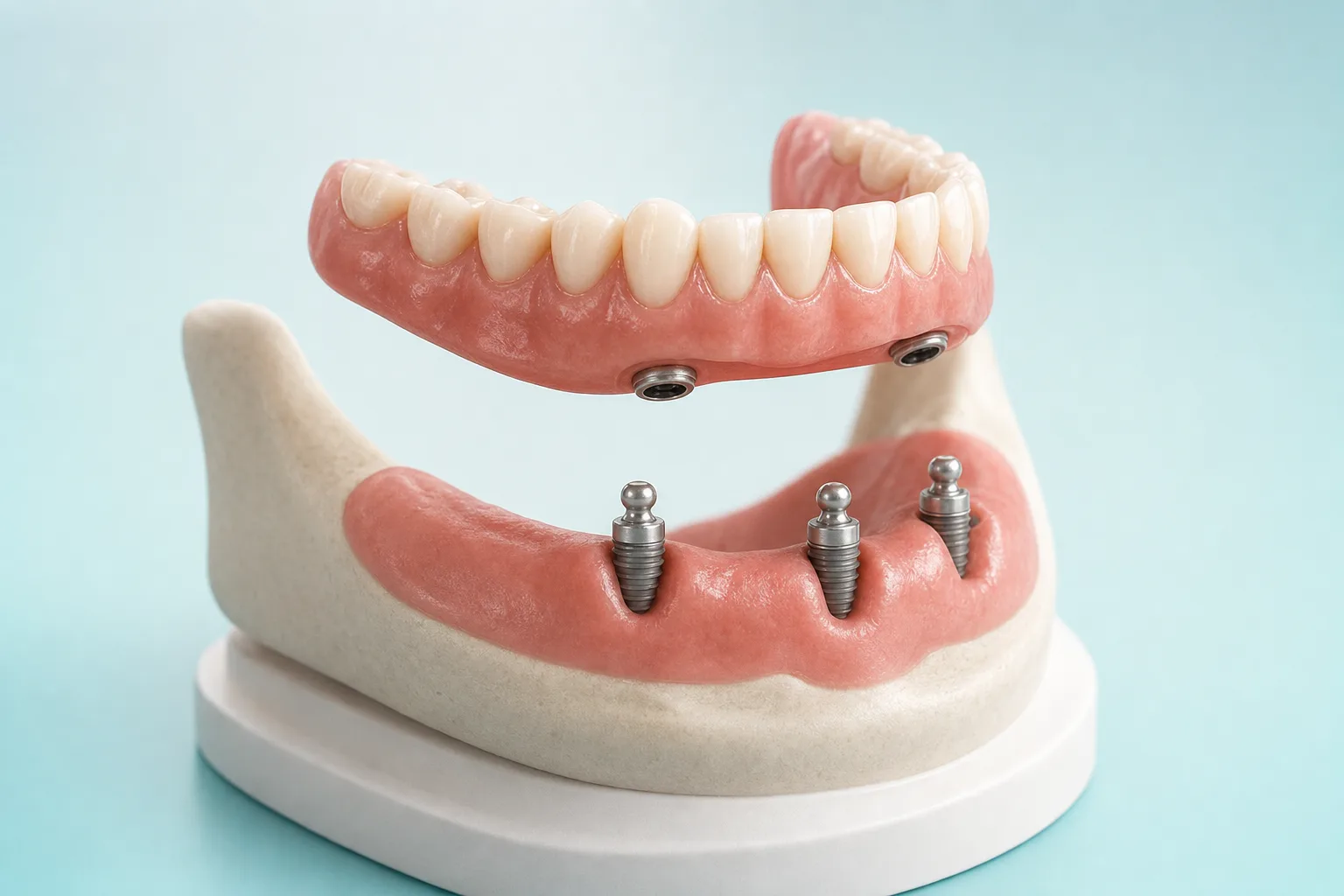
For a full lower arch that will not hold a denture, ask specifically about a removable overdenture on four implants. The denture snaps onto the implants and lifts out for cleaning, which keeps bone demand and maintenance lower than a fixed reconstruction while ending the sliding and the adhesive. It is what we provide at Rio Hondo Dental in Downey, and for many people turned down for a full fixed arch, it is the option that fits. If a conventional denture is the right starting point instead, that is a legitimate plan too.
What to bring to a candidacy consultation
Screening lands faster and more accurately when you arrive with these:
- Every medication, including injections and infusions — denosumab, biologics, anything given at a clinic rather than taken at home.
- A recent HbA1c if you are diabetic, ideally from the last three months.
- Radiation history if you have had head or neck cancer: which year, which field, and the dose if you can get it.
- How long you have been on a bisphosphonate, and whether corticosteroids ran alongside it.
- An honest smoking or vaping count. The number changes the plan; the guess changes nothing.
Four questions worth asking back: Is this an absolute contraindication or a relative one? What specifically would change your answer? If we graft, what is the total timeline before the crown goes on? What happens if the implant fails — who pays for what? A practice that answers those directly is one worth trusting with surgery.
Find out where you actually stand
If you have been told you are not a candidate, or you suspect it and have not asked, a consultation with Dr. Sameer Aljanedi will tell you which column you are in and what would move you out of it. Our Downey team is bilingual and se habla español — book a consultation or call (562) 928-5559.
Have questions about your smile?
Dr. Sameer Aljanedi and the team at Rio Hondo Dental Office are here to help. Se habla español.