Dental Implants
Bone Grafting Before an Implant: What Recovery Is Really Like
Few phrases empty a patient's face faster than "you will need a bone graft first." It sounds major, expensive and painful. In practice it is one of the more routine things we do, and the recovery is usually milder than the extraction that created the problem.
The short version
- Grafting rebuilds jawbone so an implant has something solid to anchor into.
- The procedure is done under local anaesthetic; sedation is available.
- Most people are back to normal in a few days, with a soft diet for a week or two.
- The wait — three to six months — is the hard part, not the surgery.
Why you need one at all
Jawbone survives on use. Every bite sends force down a tooth root into the bone, telling it to stay dense. Take the root away and the signal stops. The ridge starts remodelling within months, and the fastest loss happens in the first year after an extraction.
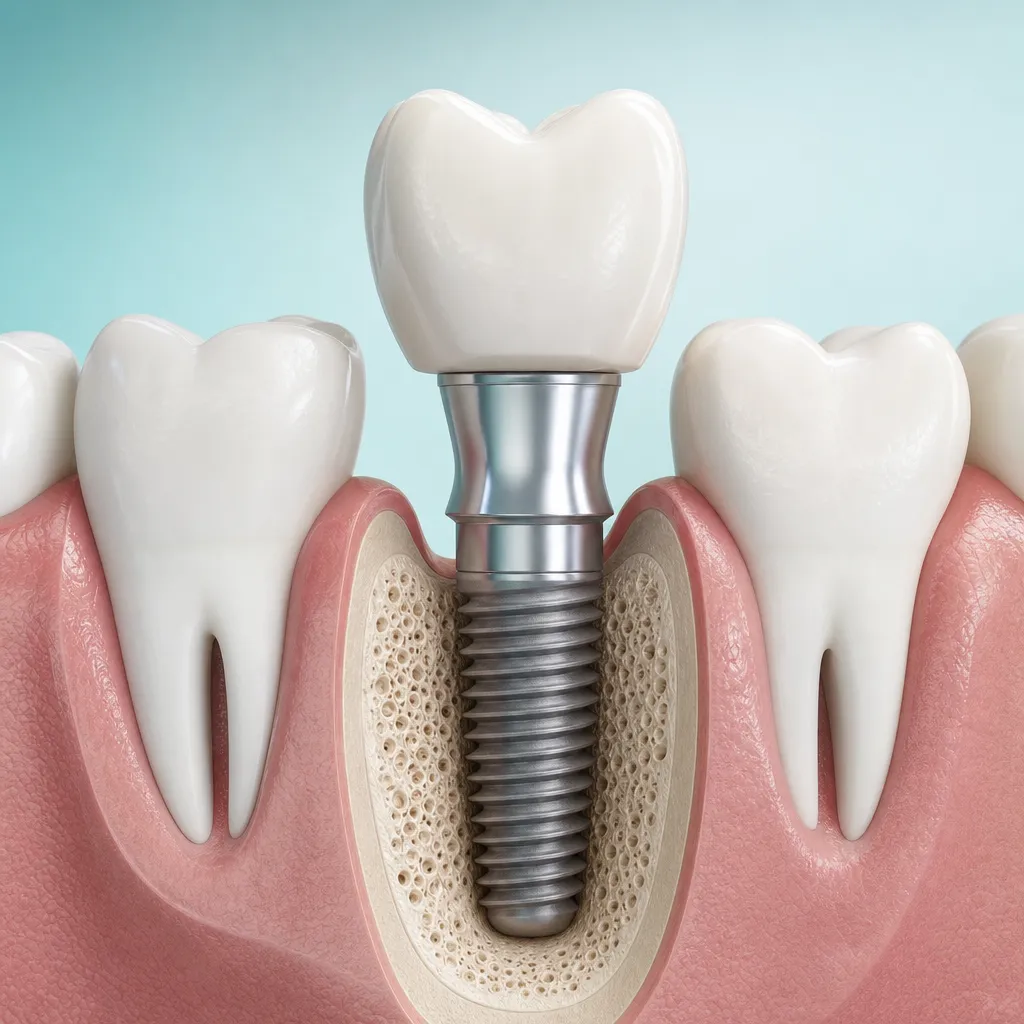
An implant needs enough bone in three dimensions to be stable and to stay stable. If there is not enough, we build it. Skipping the graft and placing the implant anyway is how implants fail.
The three kinds you might be offered
Socket preservation is done at the same appointment as the extraction. We fill the empty socket so it heals full rather than collapsing. It adds very little to that visit and frequently shortens your overall timeline — if you are having a tooth out and might want an implant later, ask about this before the extraction, not after.
Ridge augmentation rebuilds a site that has already lost width or height. This is the one people usually mean when they say "bone graft."
A sinus lift applies to the upper back jaw, where the sinus floor sits close above the molars. We gently raise the sinus membrane and place bone beneath it.
What the appointment is like
You are numb throughout, and if you are anxious you can be sedated — ask about sedation options in advance. You will feel pressure and hear some sounds; you should not feel pain. A straightforward graft takes under an hour.
Graft material is most often a thoroughly screened processed donor or synthetic material that acts as a scaffold your own bone grows into and eventually replaces. Patients are often surprised by this — it is not a permanent foreign object, it is a template.
Recovery, honestly
Days one to three: swelling peaks around day two. Ice on and off for the first day, keep your head elevated when sleeping, and stay ahead of discomfort with the pain relief we recommend. Most patients describe it as sore rather than painful.
The first week: soft foods, no straws, no smoking, and no vigorous rinsing — all three can disturb the site. Some small granules may appear in your mouth in the first days; a few are normal.
Weeks two to six: most people are back to normal eating. The gum has closed and life feels ordinary again even though the real work is still happening underneath.
Months three to six: nothing to feel, nothing to do. We re-scan to confirm the bone has matured before placing the implant.
Call us promptly if pain increases after day three, if swelling worsens rather than improves, or if you develop a fever — those are not normal, and early attention is straightforward.
"Can I just skip it?"
Sometimes there is a genuine alternative. An overdenture on four implants can sometimes work with less bone than individual implants would need, and a bridge or denture avoids the question entirely. What you should not do is have an implant placed into bone that cannot support it.
If another practice has told you that you simply cannot have implants, it is worth a second opinion with a 3-D scan. "Not enough bone" is frequently a solvable problem rather than a final answer.
How to give the graft the best possible chance
Graft success is high, and a lot of what pushes it higher is in your hands during the first two weeks.
- Do not smoke or vape. This is the single biggest controllable risk factor. Smoking restricts the blood supply the graft depends on to knit into your own bone, and it measurably raises failure rates. If you have been looking for a reason to stop, this is a good one — even pausing for two weeks helps.
- No straws, no spitting, no vigorous rinsing for the first several days. Suction and pressure disturb the site.
- Keep blood sugar controlled if you are diabetic. Well-managed diabetes heals close to normally; poorly controlled diabetes does not.
- Take antibiotics and rinses exactly as prescribed, and finish them.
- Keep the rest of your mouth clean. Brush normally elsewhere — a clean mouth heals better. Just stay off the surgical site until we say otherwise.
- Eat soft, cool foods early on and skip anything crunchy, seedy or very hot for a week or so.
What it costs, and whether insurance helps
Grafting is priced by how much bone is needed and which type is done — socket preservation at extraction time is the least expensive by a wide margin, which is the practical argument for asking about it before the tooth comes out rather than months later.
Coverage varies considerably. Some plans contribute toward grafting when it is judged medically necessary; others treat it as part of an implant and exclude it. Denti-Cal generally does not cover implant-related grafting. We verify your benefits up front and give you a written estimate before anything is scheduled, and financing through CareCredit, Cherry and Sunbit is available if you want to spread it.
Next steps
Learn more about bone grafting and ridge preservation, or book a consultation with Dr. Sameer Aljanedi. We will scan, tell you exactly what your jaw can support, and put the costs in writing — with financing available. Call (562) 928-5559.
Have questions about your smile?
Dr. Sameer Aljanedi and the team at Rio Hondo Dental Office are here to help. Se habla español.