Dental Implants
Missing a Tooth? Implants vs. Bridges vs. Dentures, Honestly Compared
When you lose a tooth, you will usually be offered three routes: an implant, a bridge, or a denture. Most articles on the subject quietly push you toward implants. This one will not — because the right answer genuinely depends on your mouth, your health and your budget.
The short version
- Implants last longest and are the only option that preserves jawbone.
- Bridges are faster and cheaper, but require filing down two healthy teeth.
- Dentures cost least upfront and need relining as the jaw shrinks.
- Doing nothing is the one option with no upside.
First: why the gap itself is a problem
Teeth hold each other in position. Remove one and the neighbours begin drifting into the space while the opposing tooth slowly over-erupts because nothing is meeting it. Within a couple of years the bite has changed, cleaning gets harder, and the eventual fix is more complicated than it would have been.
Meanwhile the jawbone in that spot starts shrinking almost immediately, because the root that used to stimulate it is gone. This is the quiet cost of waiting, and it is why a patient who delays five years sometimes needs bone grafting to get the option they wanted.
Dental implants
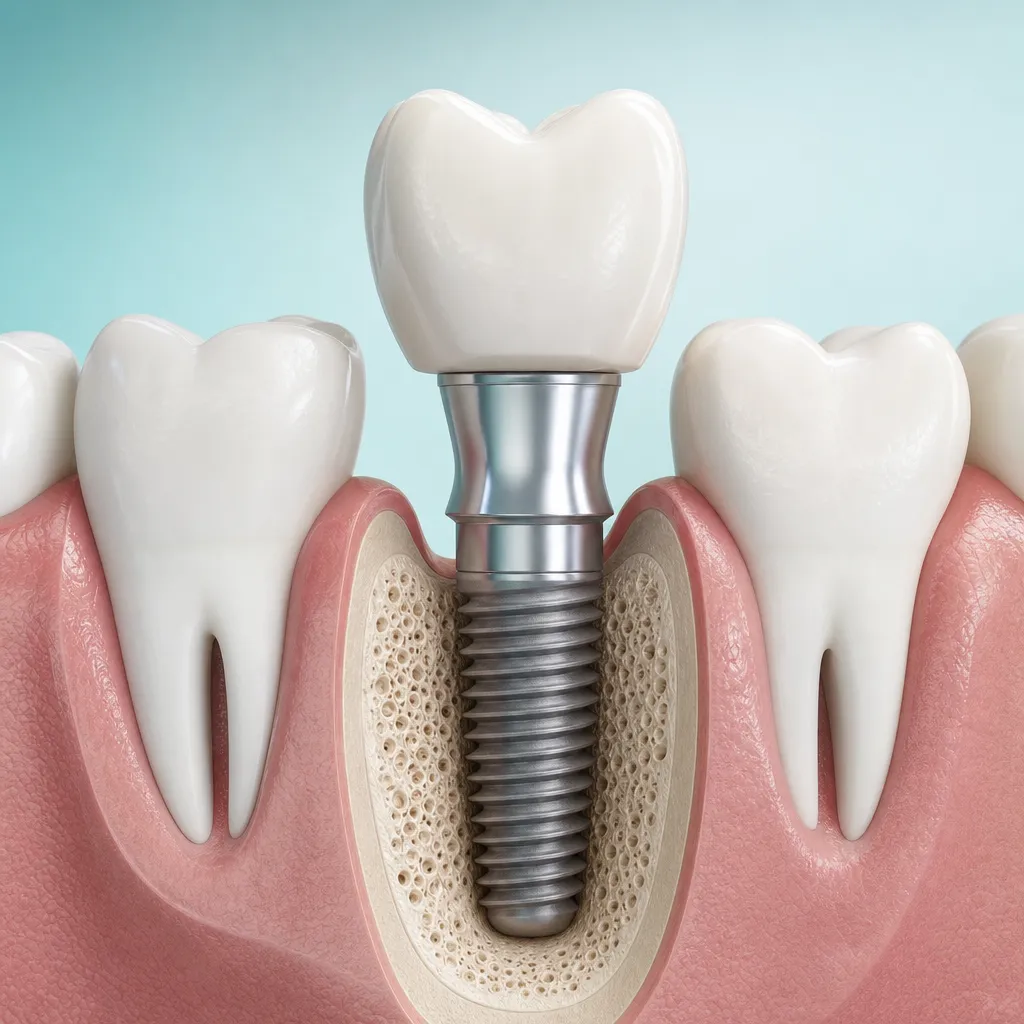
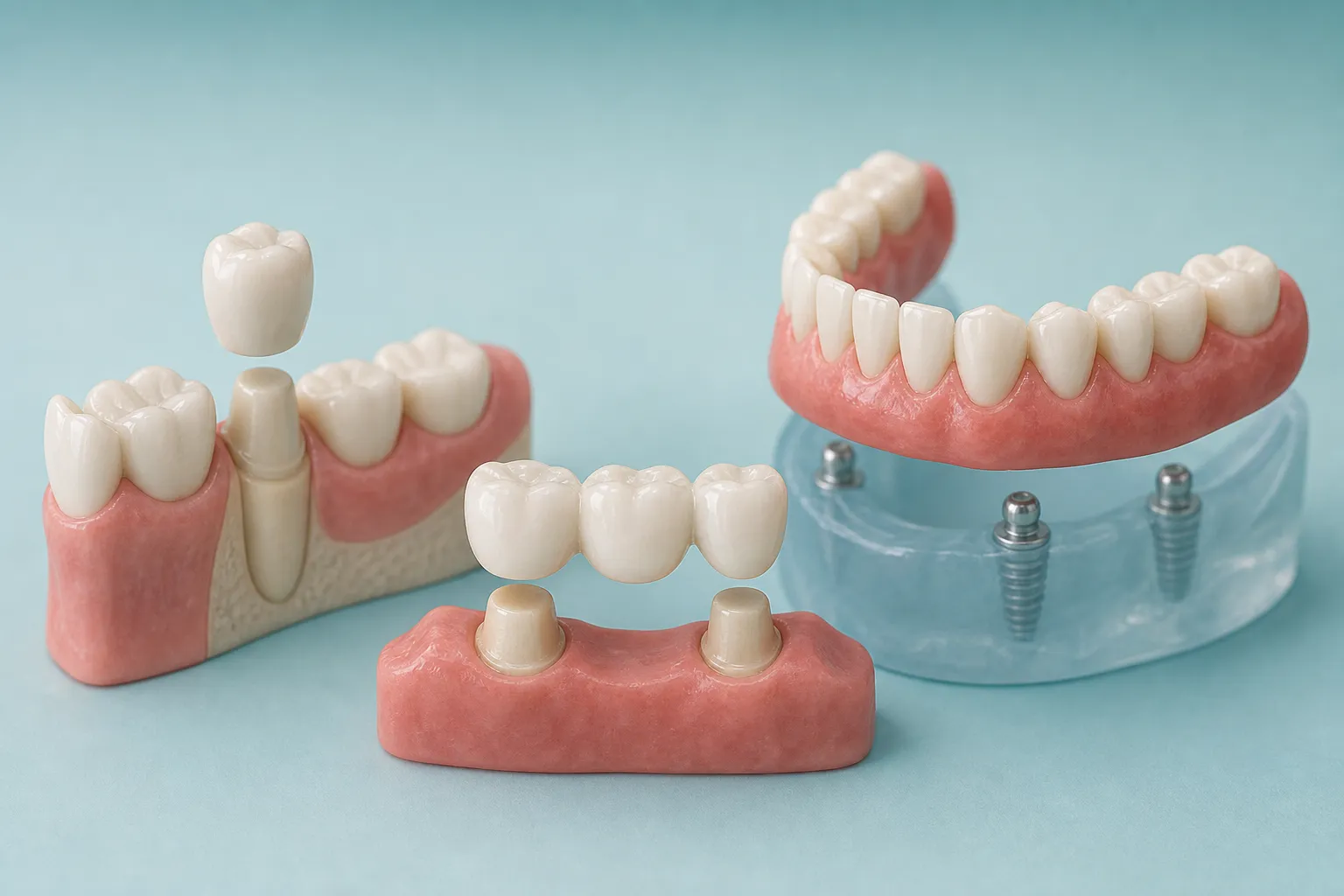
An implant is a titanium post placed in the jaw that acts as a replacement root, topped with a custom crown. It stands alone, so the neighbouring teeth are left untouched, and it keeps loading the bone the way a natural root did.
Good for: one or several missing teeth, when you have — or can rebuild — enough bone.
Drawbacks: highest upfront cost, and it takes months because the implant must fuse with bone before the crown goes on. Uncontrolled diabetes and heavy smoking meaningfully reduce success rates.
Dental bridges
A bridge spans the gap by crowning the teeth on either side and suspending a replacement tooth between them. It is fixed in place, looks natural, and is typically finished in two or three visits.
Good for: a single gap with healthy teeth either side — and especially good when those teeth already need crowns.
Drawbacks: two healthy teeth get permanently filed down, which is a real cost that rarely gets emphasised. The bone under the gap keeps shrinking, and cleaning beneath the bridge takes technique.
Dentures — full, partial and implant-secured
A partial denture fills several gaps; a full denture replaces an entire arch. They are by far the most affordable route and can be made quickly.
Drawbacks: they rest on the gums, so they move, reduce bite force, and rely on adhesive. Because the ridge underneath keeps shrinking, they need relining every few years.
The middle path most patients have never heard of is an overdenture secured by four implants. It snaps firmly onto implants, restores far more chewing force, slows bone loss, and still lifts out for cleaning — at a fraction of the cost of replacing every tooth individually. For a whole arch, this is the option we find patients are happiest with.
What about cost over time?
Comparing sticker prices is misleading. A denture is cheapest today but is relined periodically and remade every five to eight years. A bridge may need replacing at ten to fifteen years, and if one of the supporting teeth fails you are suddenly solving a bigger problem. An implant costs the most upfront and frequently outlasts both by decades.
Look at the twenty-year picture, not the quote. Sometimes that still points to a denture — if money is tight now, a working denture today beats a perfect plan you never start.
Front teeth and back teeth are different problems
Where the gap sits changes the calculation more than most people expect.
Front teeth are about appearance, and the margin for error is small. Gum shape, the way light passes through the edge of a tooth, and how the tooth emerges from the gum all matter. Implants excel here because they come out of the gum like a natural tooth rather than sitting on top of it — but they demand careful planning, and a thin gum or a lost bone contour needs attention before anything is placed.
Back teeth are about force. Molars do the heavy chewing, and that is where dentures disappoint people most — bite force with a conventional denture is a fraction of natural teeth, which is why patients quietly stop eating steak, apples and crusty bread. If you are missing molars and you care about eating normally, implants or an implant-secured option are worth serious consideration.
Five questions worth asking before you decide
- What are all my options — including the ones you would not choose? A good answer includes the cheap option and why it might or might not suit you.
- What happens to the bone with each option? This should not be a surprise question.
- Which of my healthy teeth get altered? Bridges cost you tooth structure that never comes back.
- What is the realistic lifespan, and what happens when it fails? Everything eventually needs attention; you want to know what plan B looks like.
- Can I see the whole cost in writing, including the parts insurance will not cover?
If a practice is reluctant to answer any of those plainly, that itself is useful information.
How to actually decide
Three things settle it: how much healthy bone you have, whether the neighbouring teeth are already compromised, and what you can comfortably afford. A consultation and 3-D scan answer the first two in about half an hour.
See our full side-by-side comparison, or call (562) 928-5559 and we will give you a written estimate for each option that your mouth can actually support — including the honest trade-offs.
Have questions about your smile?
Dr. Sameer Aljanedi and the team at Rio Hondo Dental Office are here to help. Se habla español.